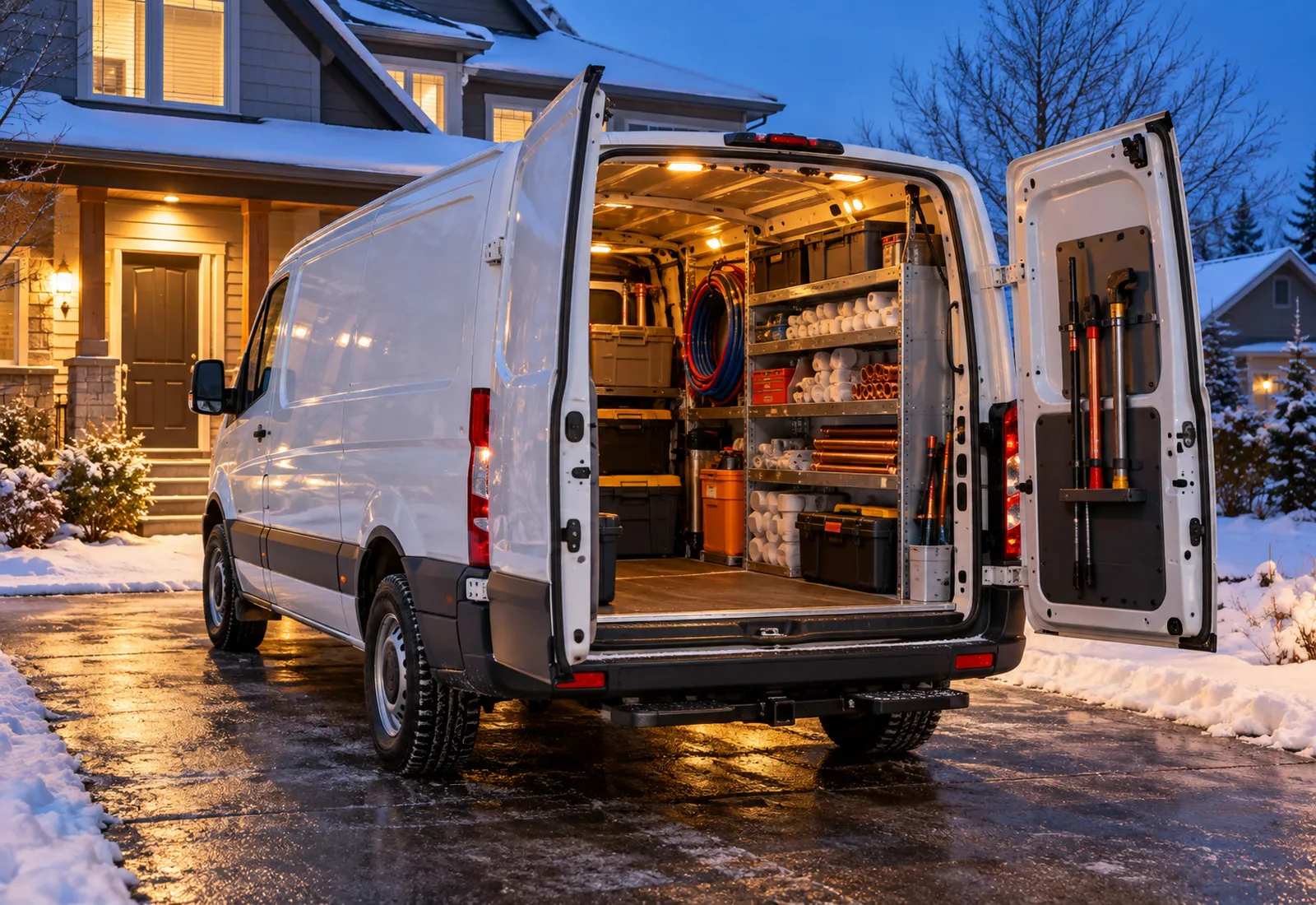
A supply leak
Clean water from a burst pipe, fitting or appliance hose.
First: close the main shut-off.
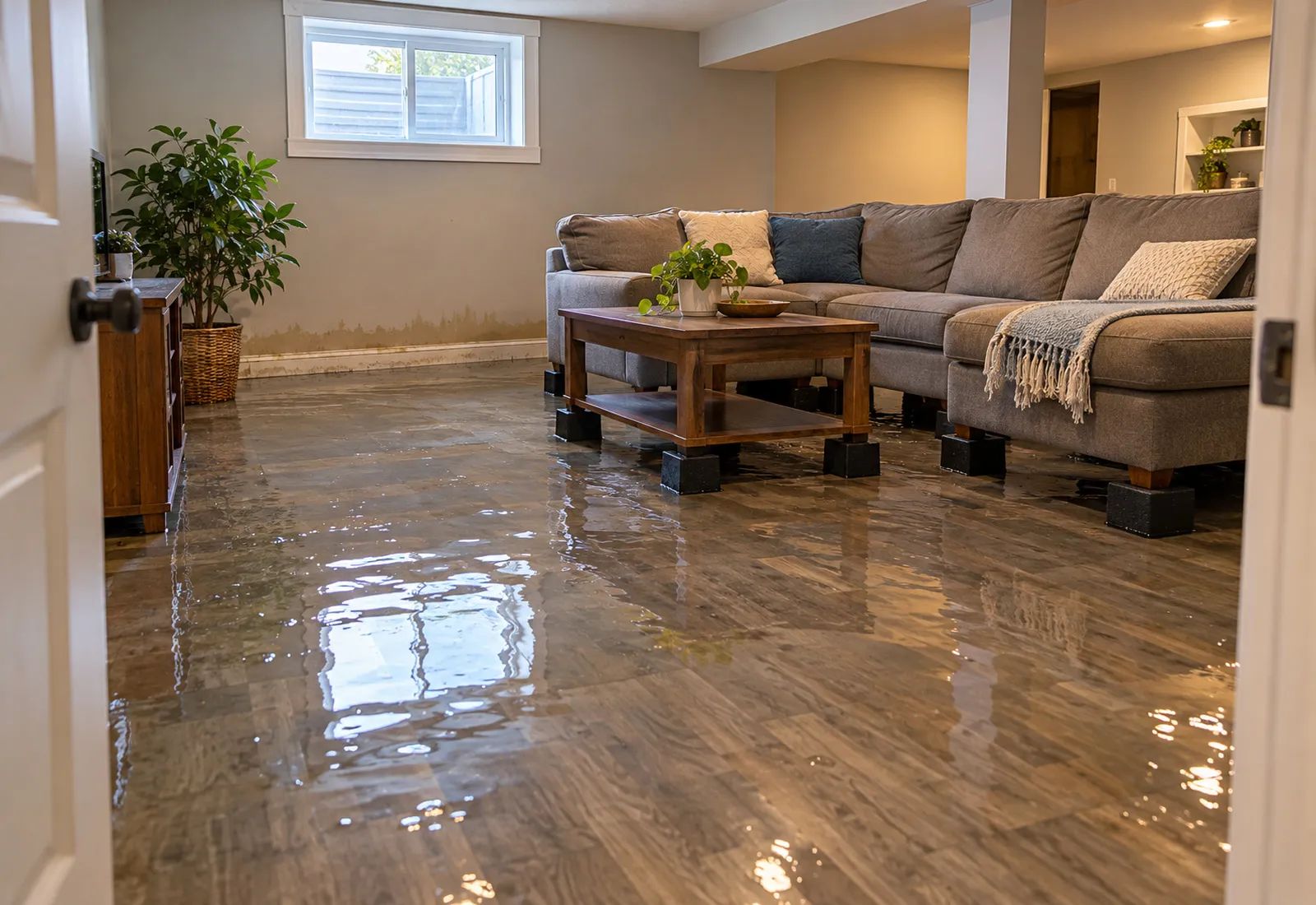
Clean water from a burst pipe, fitting or appliance hose.
First: close the main shut-off.
Water seeping in during rain or snowmelt — often a sump pump that failed or lost power.
First: check the sump pump has power and is running.
Dirty water rising through floor drains or toilets when city sewers are overloaded.
First: stop using all water in the home.
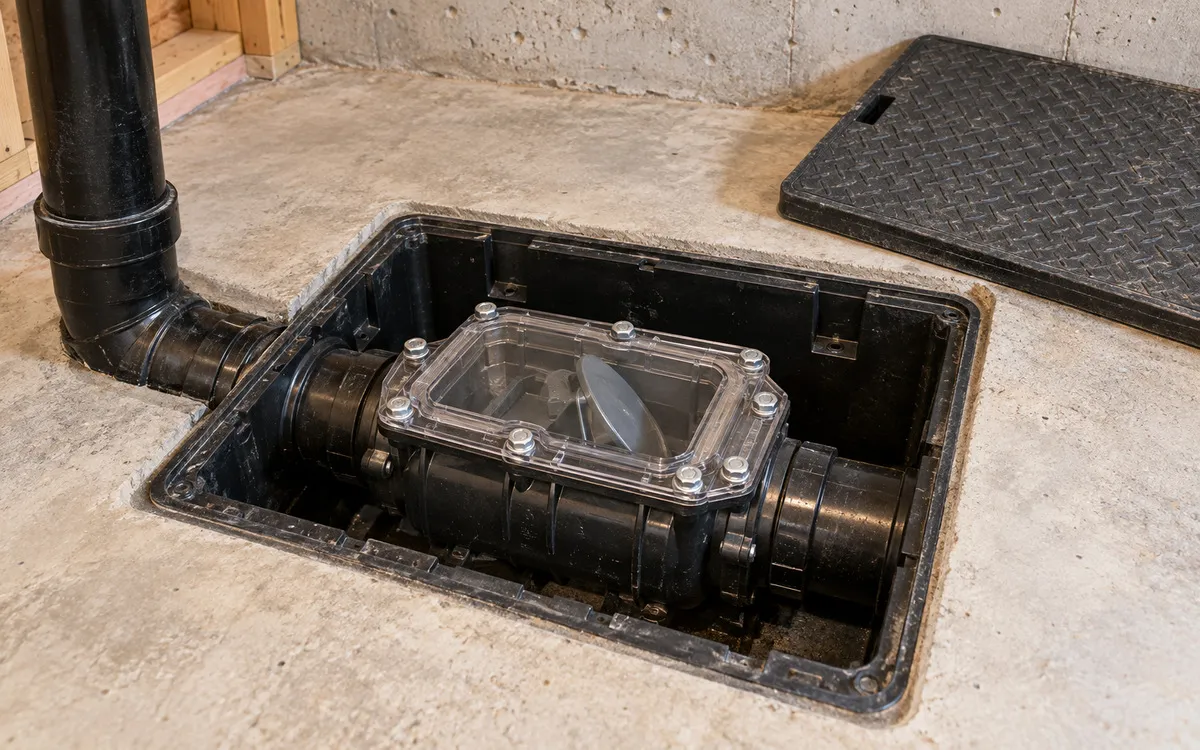
A one-way valve on the main sewer line that lets wastewater leave but closes when city sewers surcharge in a heavy storm. When it’s closed, don’t use fixtures — the water has nowhere to go.
Installation usually needs a plumbing permit, a licensed contractor and a municipal inspection.
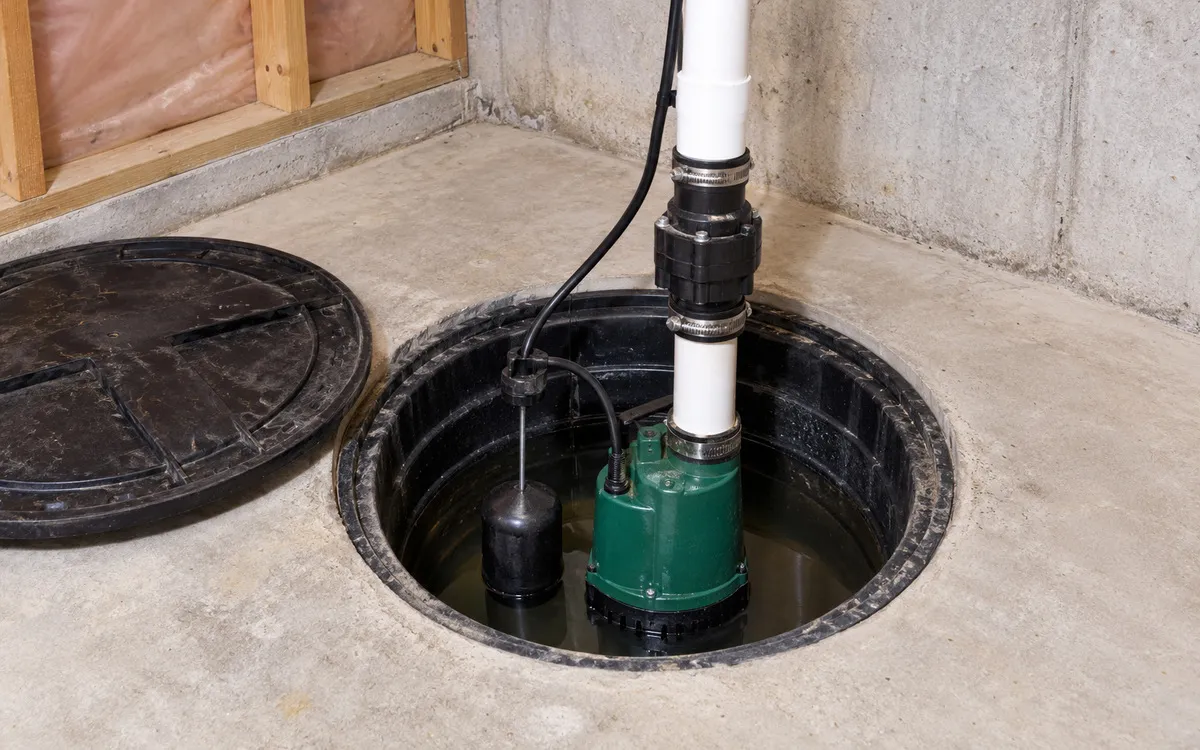
It pumps water collected around the foundation to the outside. Storms can knock out power, so a battery backup keeps it running when it’s needed most.
Discharge should drain onto a permeable surface away from the foundation.
Several Canadian municipalities run basement flooding protection programs that subsidise backwater valves, sump pumps and related work. Toronto’s program, for example, reimburses a percentage of eligible invoiced costs up to set limits per device.
Many basic home insurance policies exclude sewer backup unless a specific endorsement has been added. Some insurers look at whether protective devices are installed.
After the emergency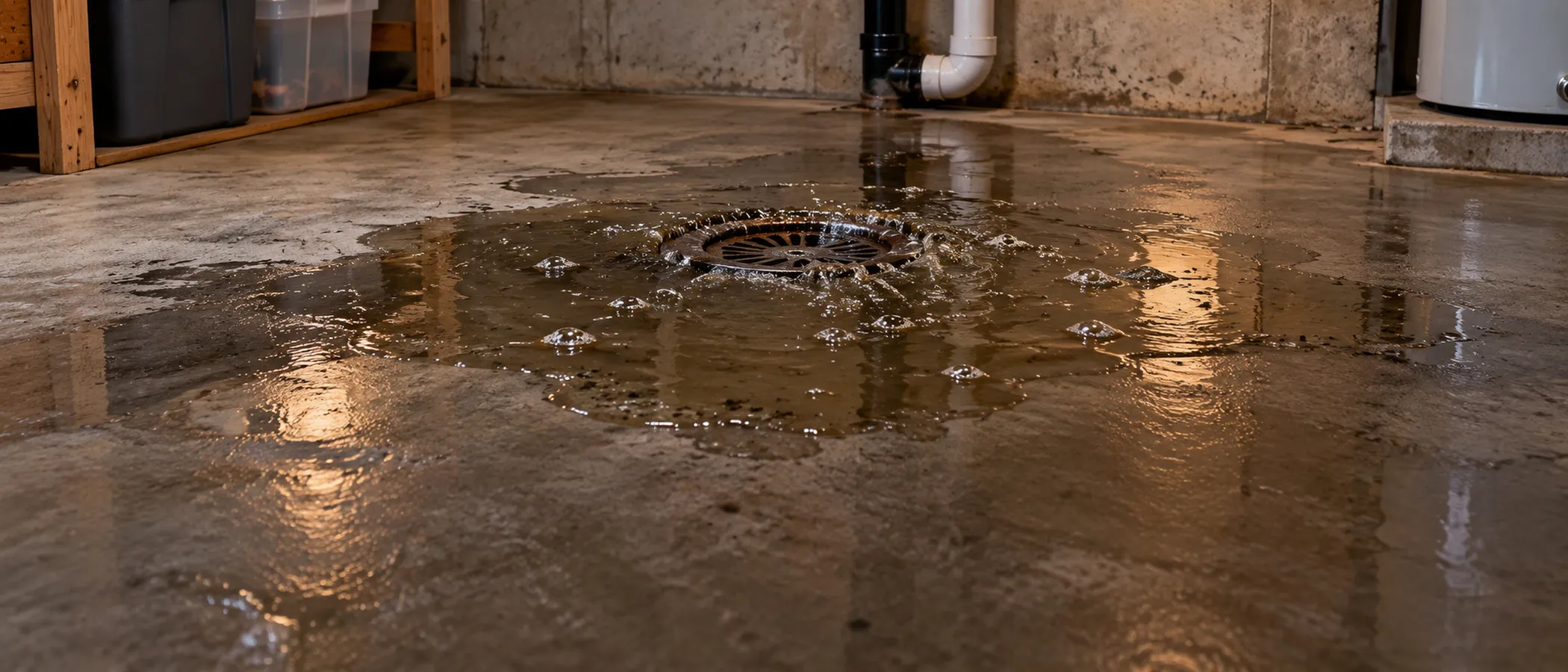
Request emergency service and tell us which source you think it is.