
Open by 6 a.m. Every storm.
Plowing, sidewalk crews, anti-icing, salting and hauling for homes, condos and commercial sites — with written triggers, service windows and a time-stamped log of every visit.
Every property plows differently.
A driveway, a condo lot and a distribution yard need different machines, timing and ice control. Pick yours.
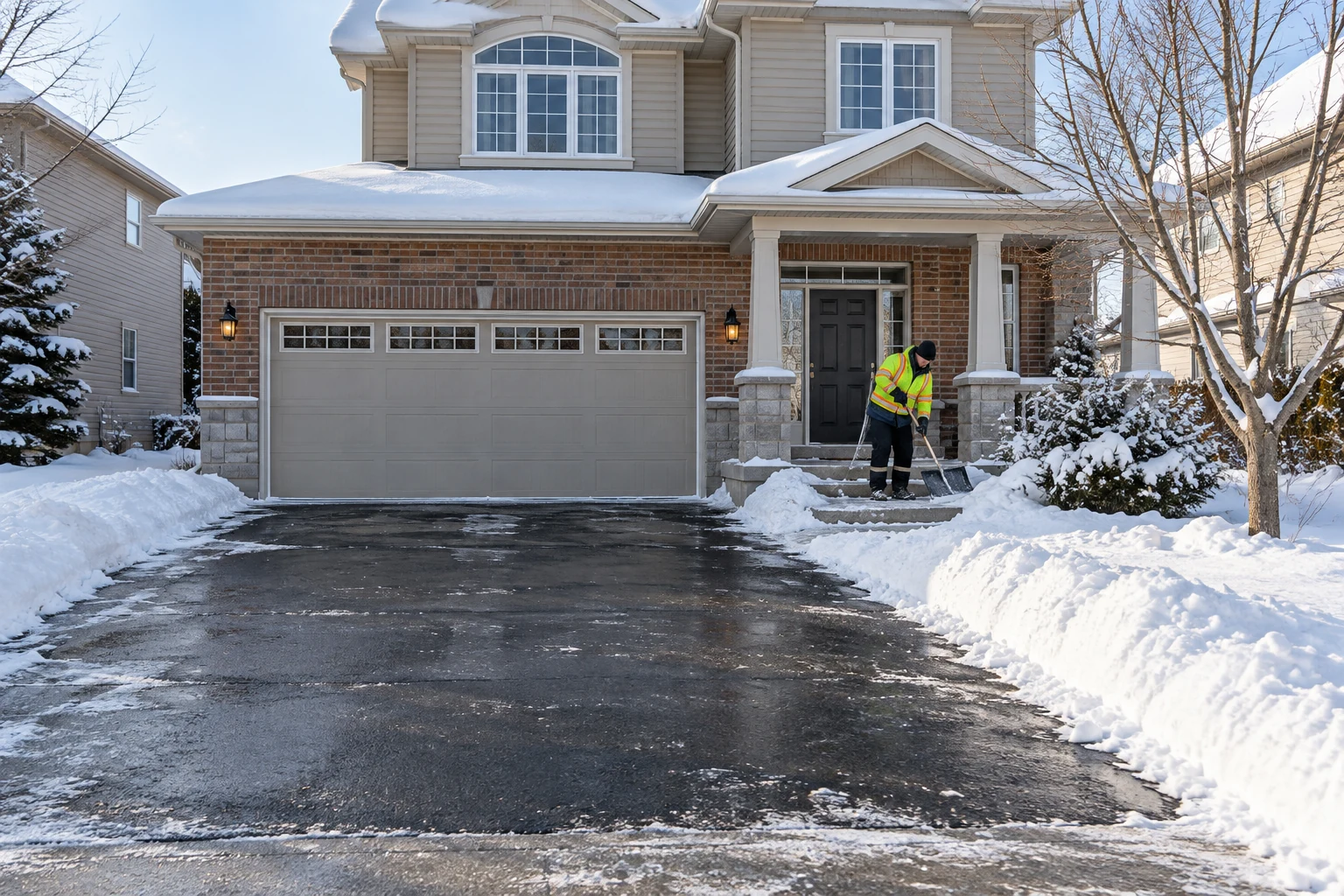
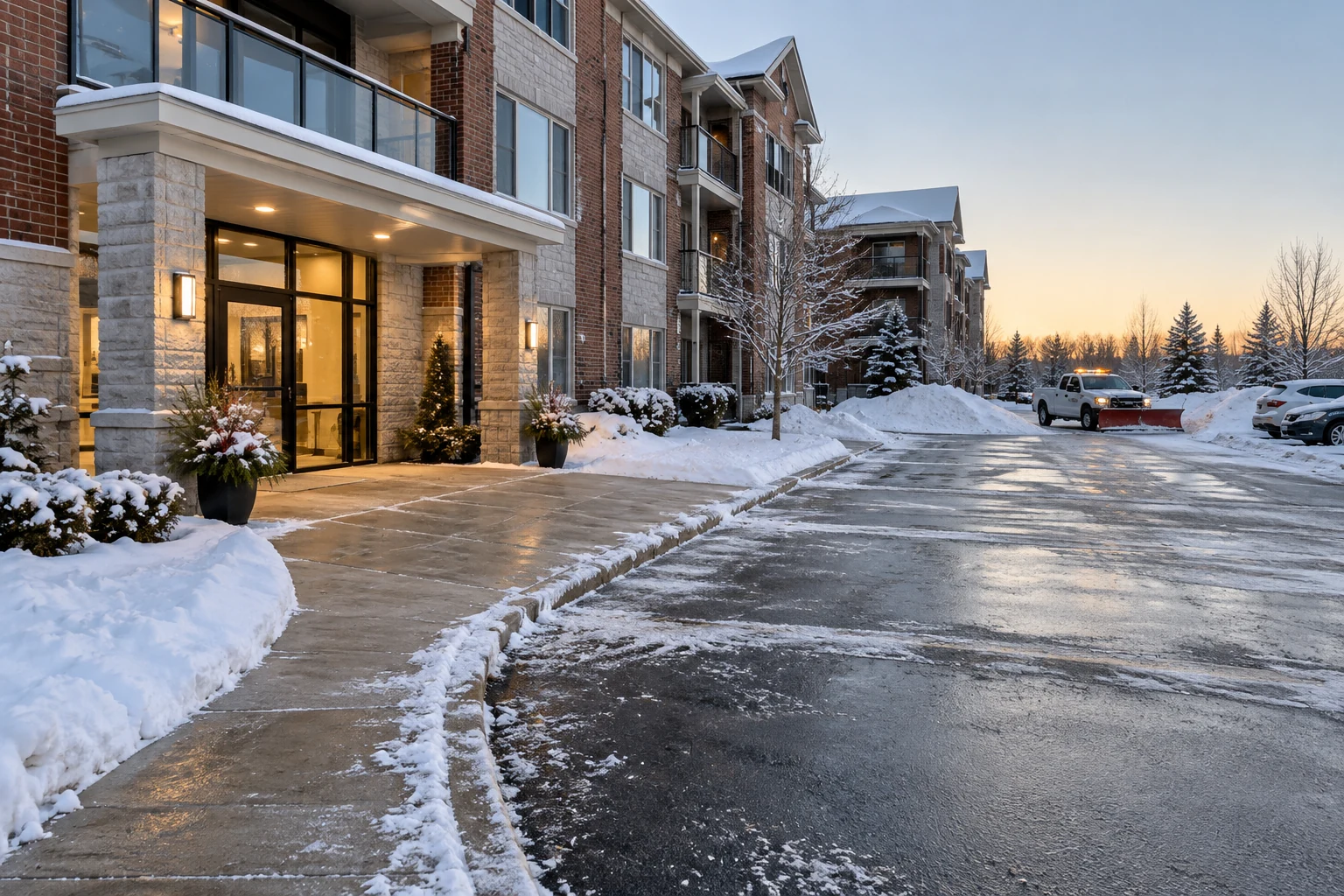
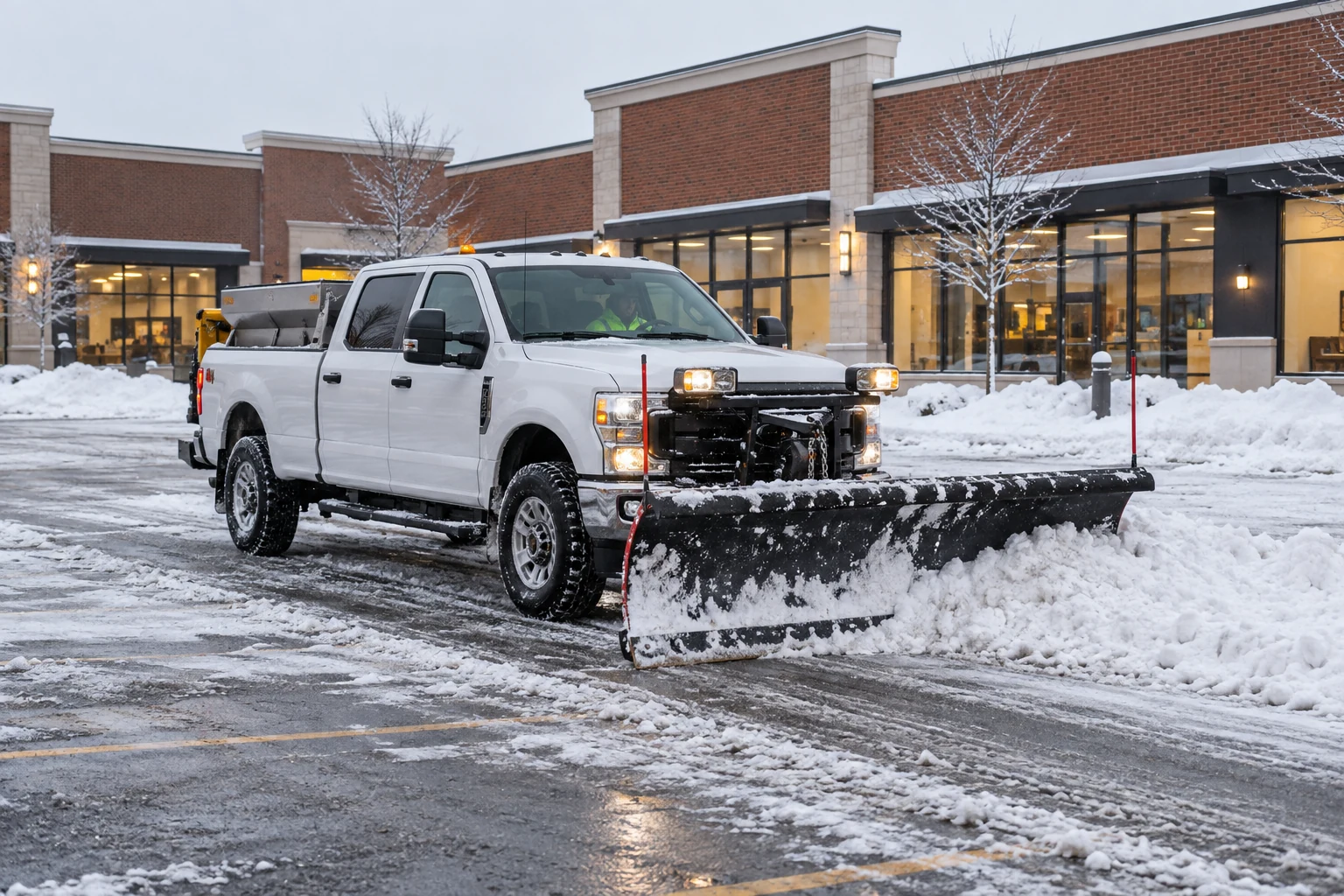
 Homes
Driveway, walkway, steps and the windrow the city plow leaves behind — serviced automatically at your trigger. Residential service
Resident parking, entrances, fire routes and garbage enclosures, with re-clears through long storms. Multi-residential
Lots and storefront walks open before business hours, re-cleared during the day. Commercial service
Docks and truck routes kept moving for every shift, with loaders and on-site salt. Industrial sites
What happens while you sleep.
Drag the timeline or press play to follow an 18 cm overnight storm — from forecast to the service log in your inbox.
Commercial trigger hit
Commercial crews roll.
Illustrative storm. Real dispatch follows each property’s written trigger depth and service window.

Snow is visible. Ice is the risk.
Most slip-and-falls happen on ice. Freeze-thaw, freezing rain and refreezing meltwater each need their own treatment — chosen by pavement temperature, not habit.
- Brine anti-icing before storms, where conditions suit
- Rock salt, pre-wet salt or chloride blends matched to the cold
- Sand or grit for traction when salt stops working
No guessing at 3 a.m.
Every property gets a written service plan before the season. It is the difference between “we’ll get there” and a crew that knows exactly what to do.
Work, logged like a dispatch ticket.
Examples of the routes and sites a winter crew services — from a single driveway to a distribution yard. Full field log
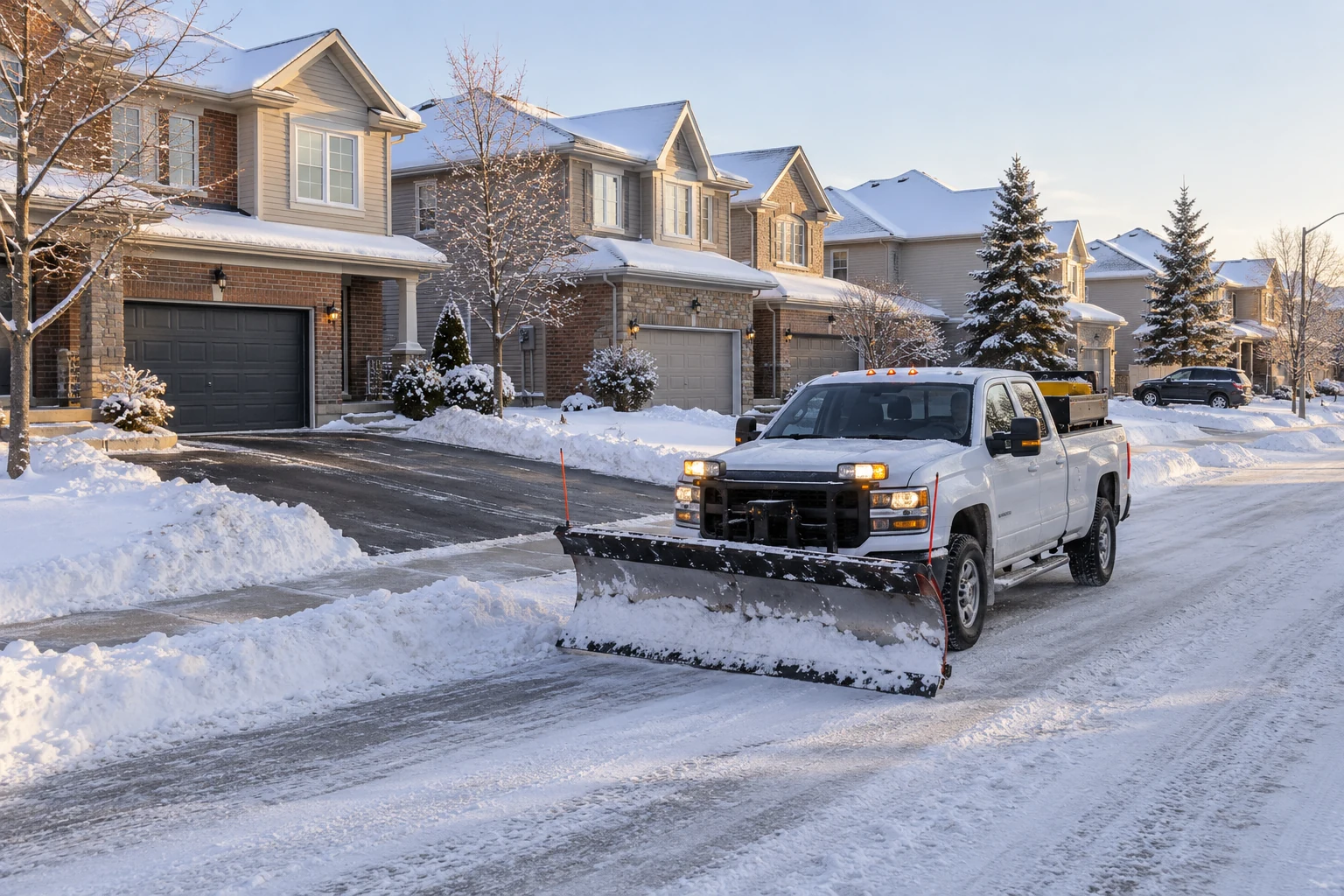
Seasonal driveway route
- Scope
- Driveway, walk, windrow
- Trigger
- 5 cm
- Window
- Before 7 a.m.
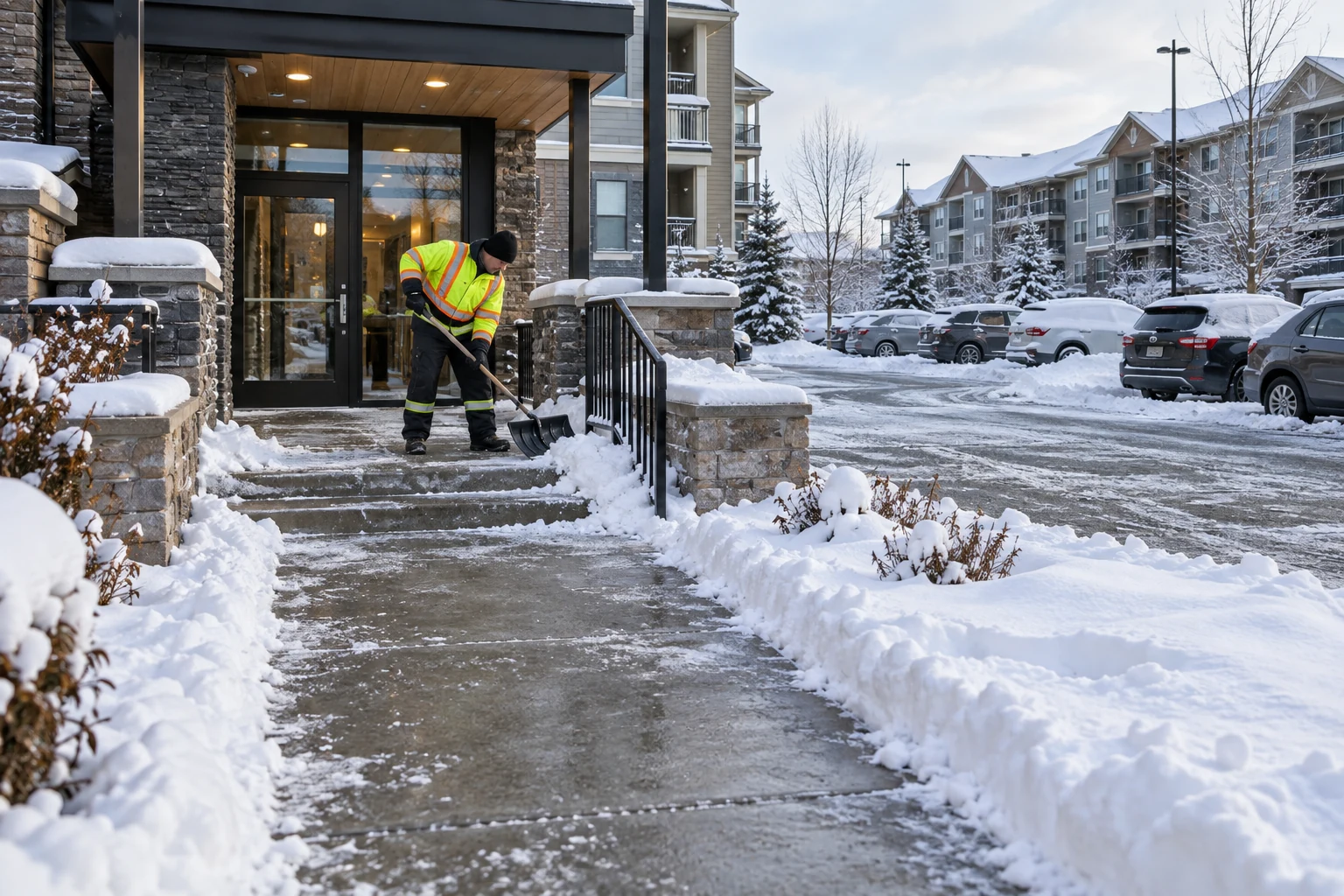
Condo lot & walkways
- Scope
- Lot, entrances, walks
- Trigger
- 2 cm
- Window
- Open by 6 a.m.
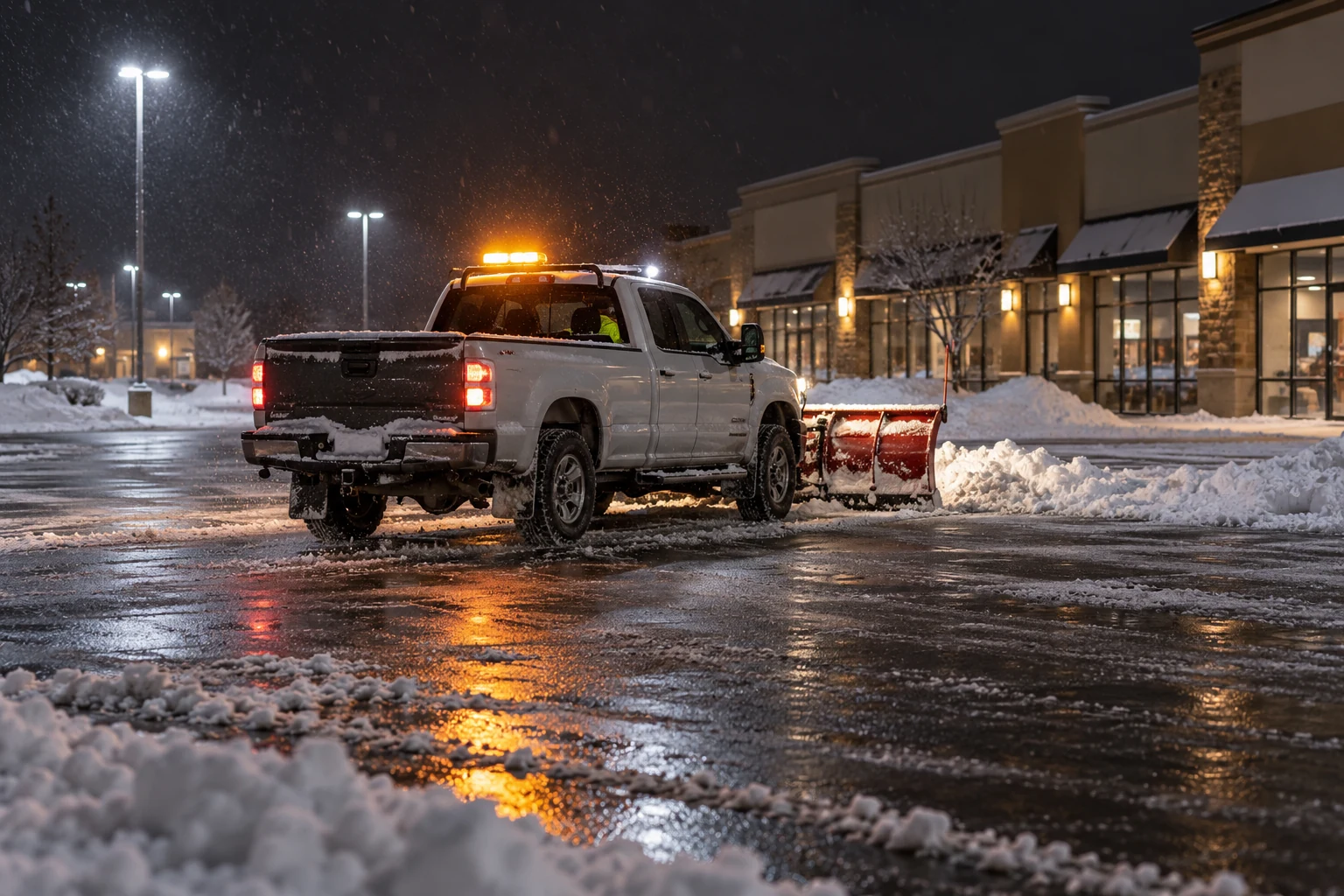
Overnight plaza clearing
- Scope
- Full lot, re-clears
- Trigger
- 2 cm
- Window
- Overnight

Pre-storm anti-icing
- Scope
- Drive aisles, entrances
- Trigger
- Forecast
- Window
- Before snow

Distribution yard
- Scope
- Docks, truck routes
- Trigger
- 1 cm
- Window
- Shift-based

Night snow hauling
- Scope
- Parking recovery
- Trigger
- After storm
- Window
- Overnight
Who carries the weather risk?
Every contract type splits the risk of a big winter differently between you and your contractor.
Seasonal
One price for the winter, often in instalments, sometimes with an event cap.
Per visit
Billed each time crews are dispatched at your trigger depth.
Per event
One price per storm, covering the re-clears that storm needs.
Hourly
Time and equipment for hauling, stacking and one-off jobs.
General guidance only. Your agreement defines events, caps and how ice control is billed.
Routes fill before the first snowfall.
Site walks, staking and route planning happen in the fall. Lock in your trigger depth, service window and contract now — not after the first storm.