Homes
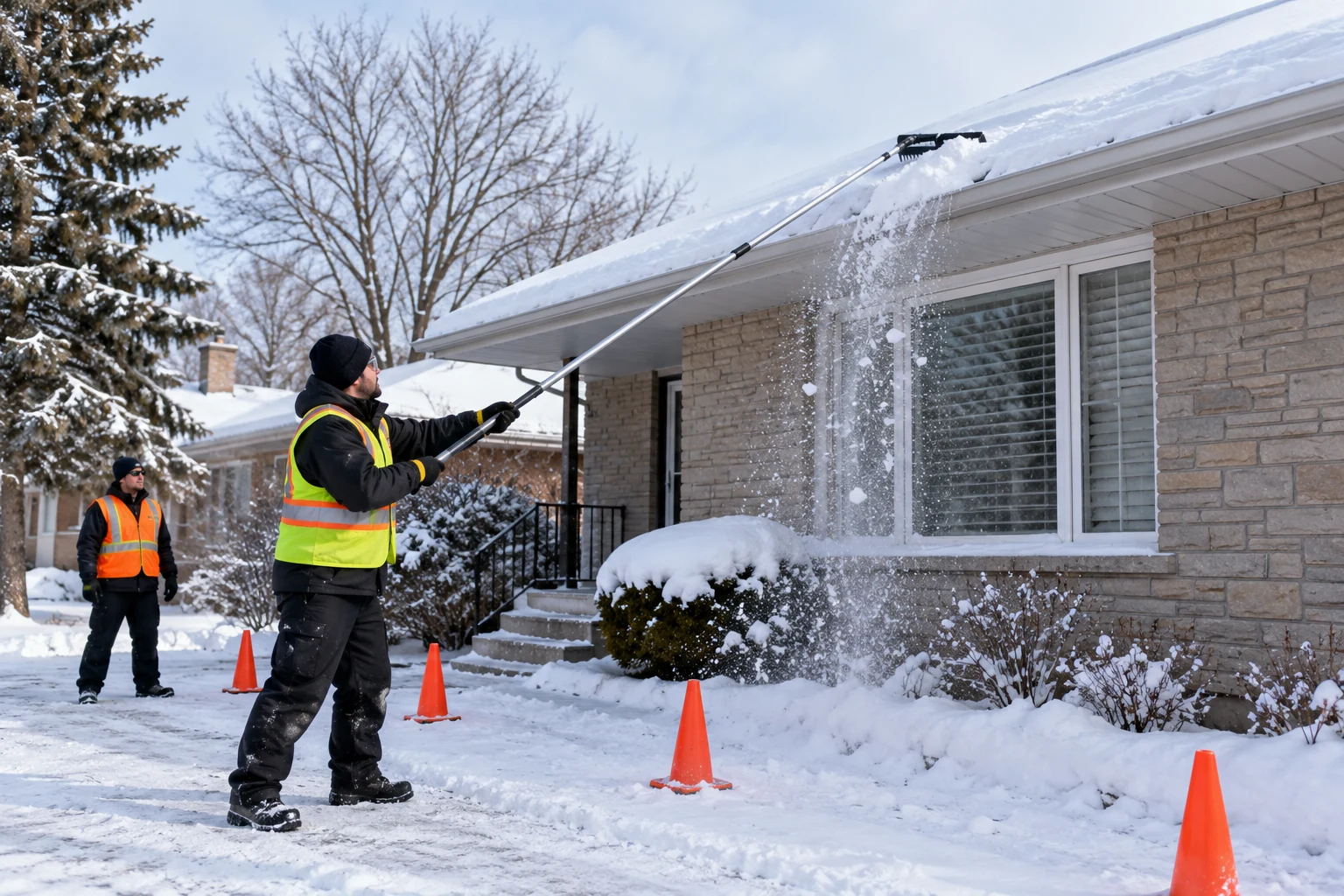
Ground-level roof raking
Snow pulled from the bottom metres of the roof, where ice dams form, without anyone climbing on a slippery roof.
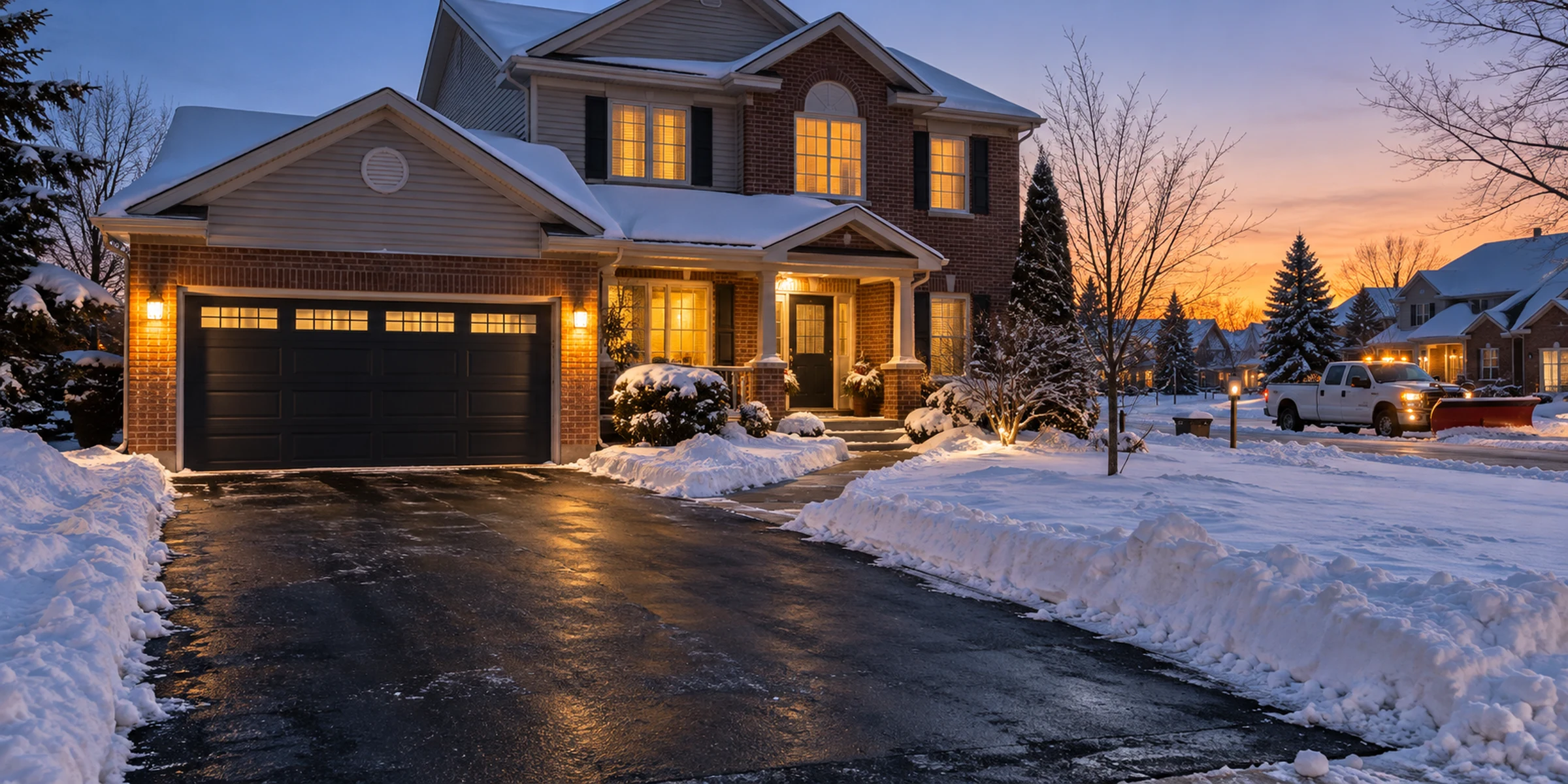
Seasonal driveway service that runs itself: crews come at your trigger depth, clear the windrow the city plow leaves behind and treat the steps.
Sign up once in the fall. From the first snowfall, your home is on a route and serviced automatically.
Plowed or blown at your trigger depth, edge to edge, with snow placed where it will not melt back across the drive.
The heavy ridge the city plow leaves at the end of the driveway, cleared after the street is done.
Front walk, steps and porch cleared by hand, where a machine would chip concrete or railings.
Concrete- and pet-friendlier options for steps and walks, applied after clearing.
Snow pulled off the lower roof edge from the ground to reduce ice damming and load.
Earlier service and full walkway clearing for seniors and residents who rely on safe access.
The ridge a municipal plow leaves behind is dense, icy and often the hardest snow of the storm. It can land after your driveway is already clear.
The trigger is the depth that starts your service. A lower trigger means more visits — and a higher seasonal price.
Service starts early in almost every snowfall. Best for steep driveways, early commuters and accessibility needs.
The common residential choice in Canada. Light dustings are left; anything you would shovel is cleared.
One full clear once snowfall stops or reaches set intervals. Lowest cost, for flexible schedules.
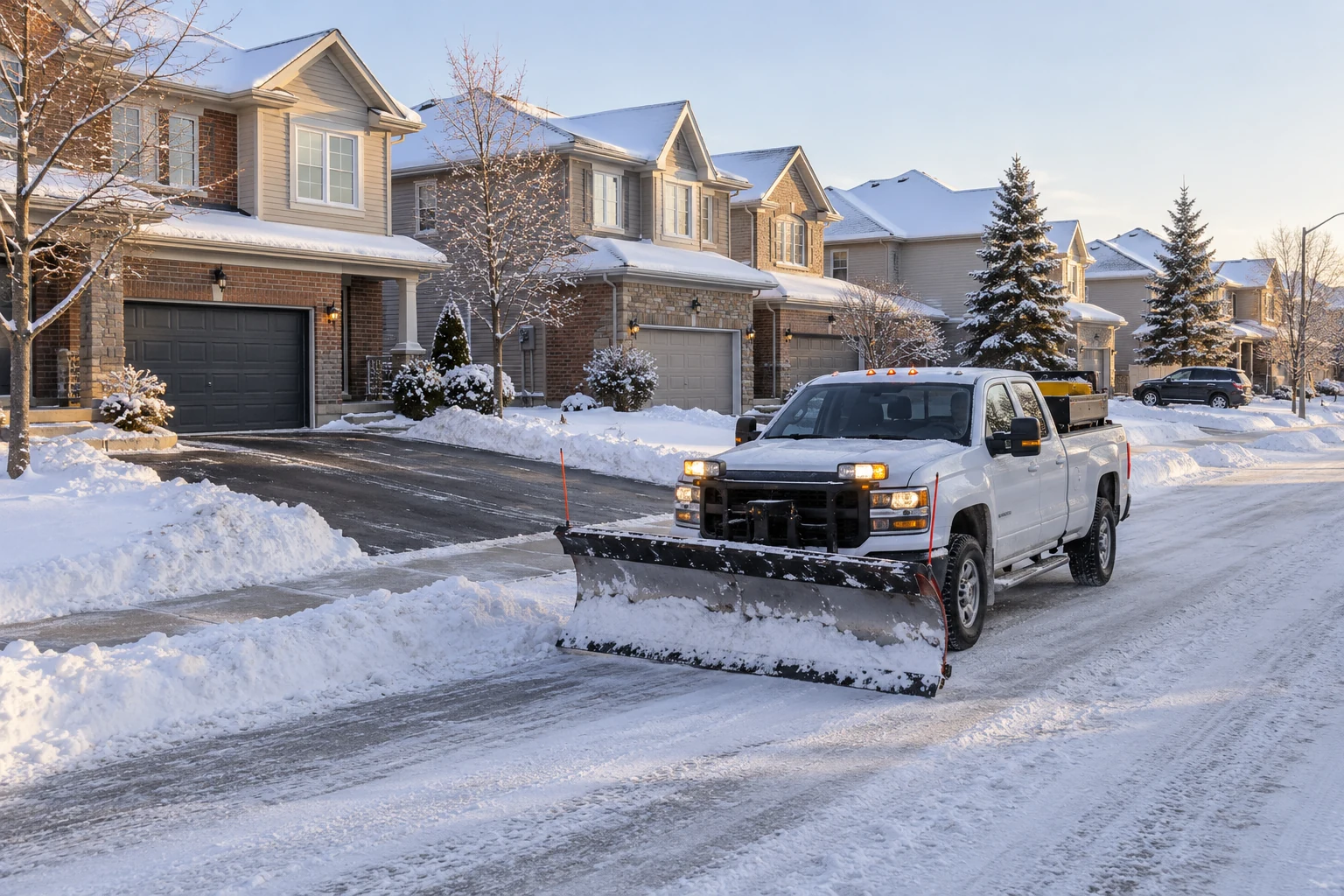
Homes are grouped into tight neighbourhood routes, so the truck that clears your driveway in December is the one that clears it in March.
Deep snow and ice dams at the eaves push meltwater under shingles. Raking the lower roof edge from the ground is the safe first step.
Snow pulled from the bottom metres of the roof, where ice dams form, without anyone climbing on a slippery roof.
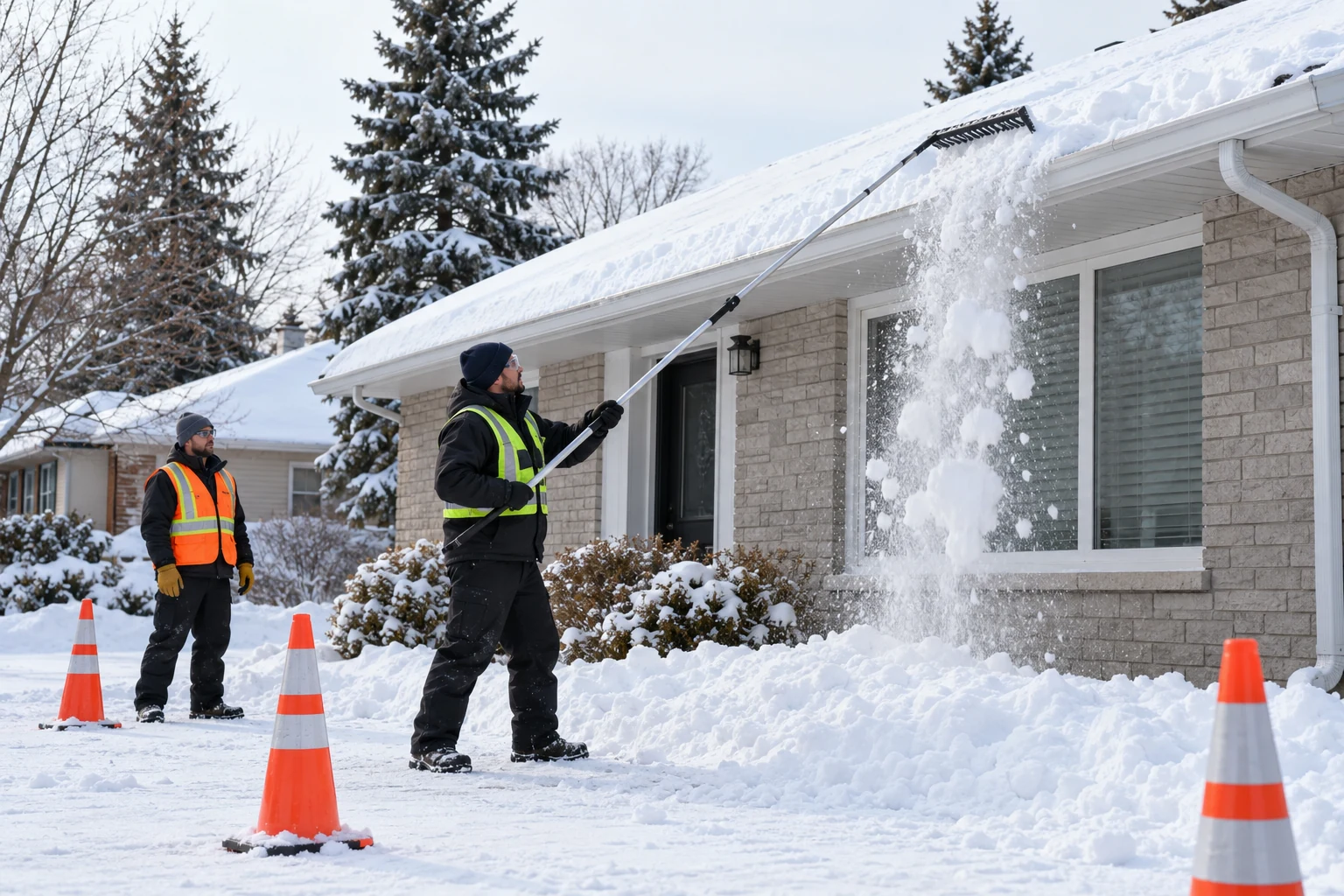
Flat and commercial roofs with heavy loads are assessed first and only worked on with proper fall protection.
More answers in the storm playbook
No. Seasonal routes are dispatched automatically when snowfall reaches your trigger depth.
Crews clear around parked vehicles and note it in the service log. Moving cars on heavy snow days gives the cleanest result.
Edges are staked before the ground freezes, and blades or blowers are chosen for the surface. Any scuffs found in spring are addressed.
Ice melt on steps and walks can be added to your plan or billed per application. Your agreement states which.
Early fall. Routes are set in October and November so staking and scheduling are done before the first snow.
Site walks, staking and route planning happen in the fall. Lock in your trigger depth, service window and contract now — not after the first storm.