01
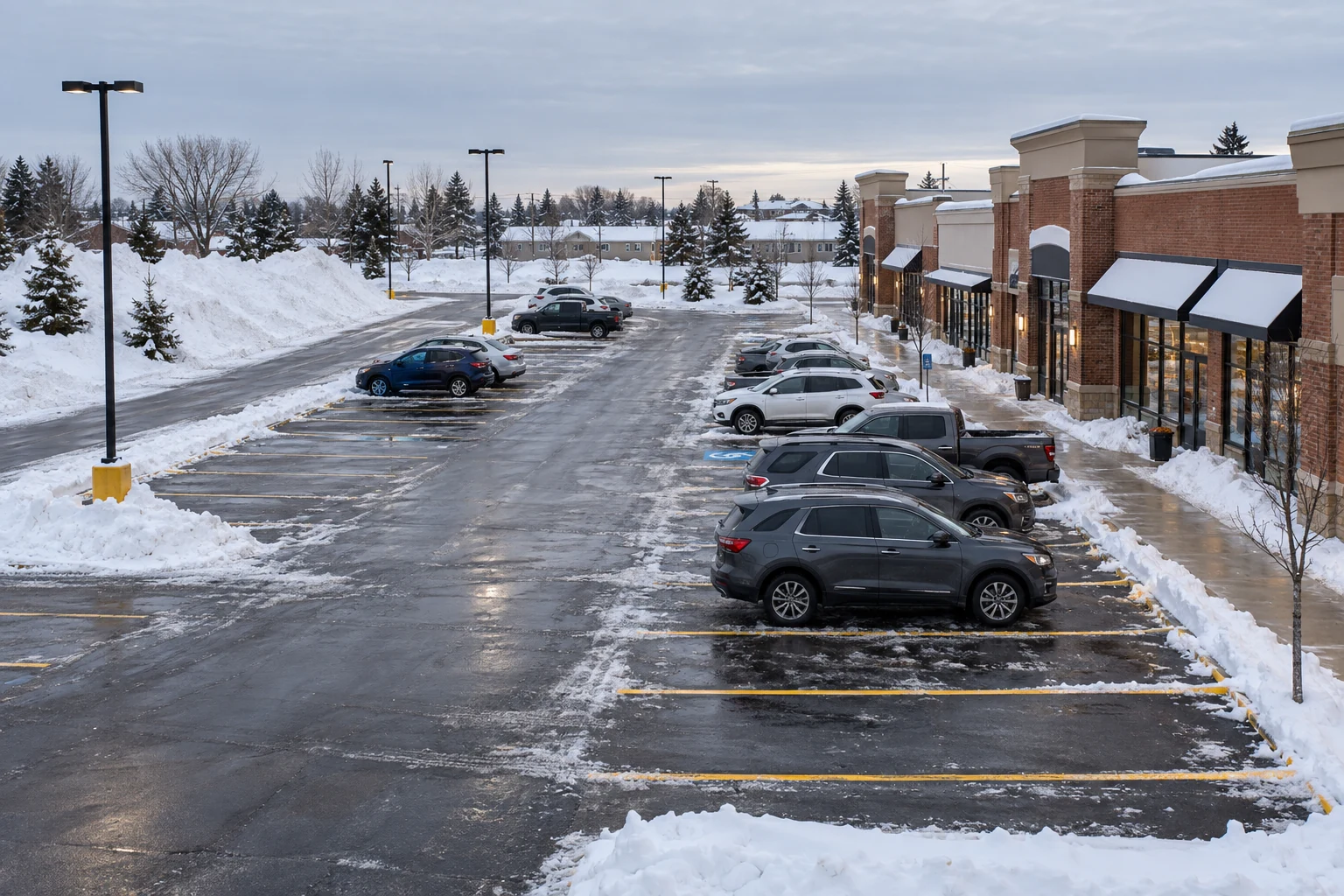
Retail plazas
Lots and storefronts open before the first customer, re-cleared through business hours.
Parking lots, condos, plazas and industrial yards — cleared in priority order, re-cleared through long storms and documented every visit.
Every commercial site is mapped in the fall. Tap a zone to see why it is cleared in that order.
White squares are catch basins — snow is never piled on them.
A plaza needs to open by 7. A condo needs its fire route clear. A distribution yard never closes.
Lots and storefronts open before the first customer, re-cleared through business hours.
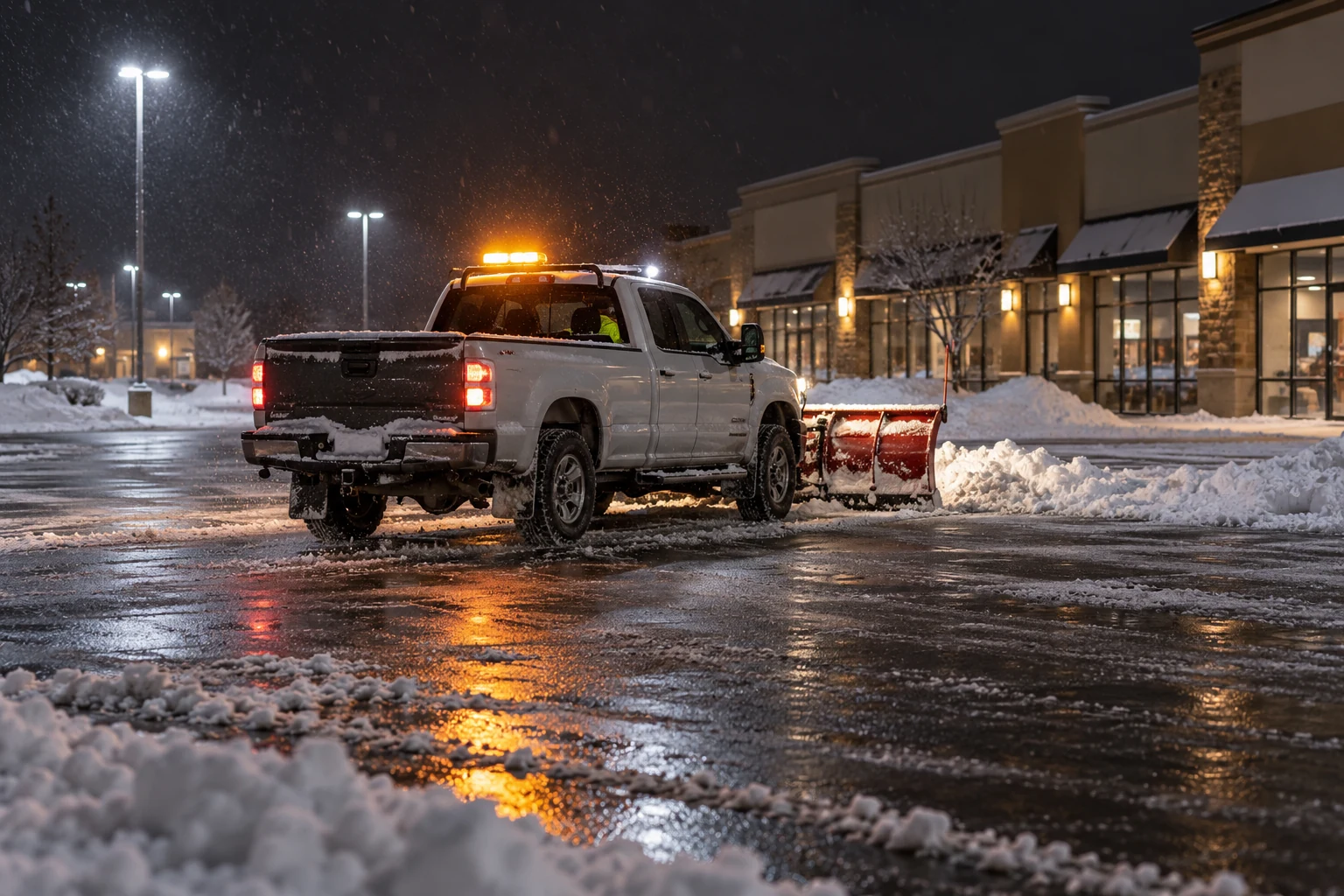
Most clearing happens between midnight and 6 a.m., when lots are empty.
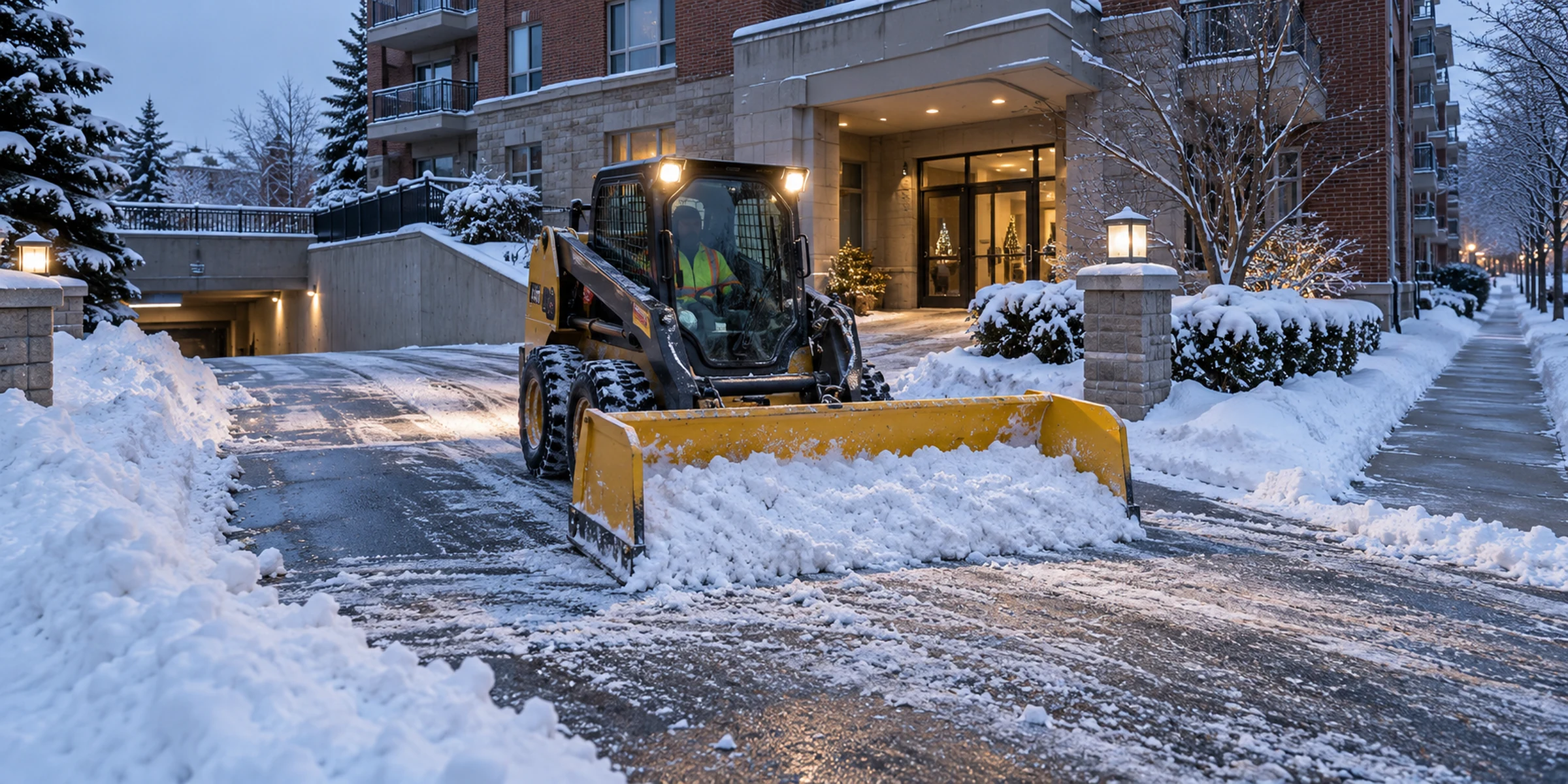
Resident parking, entrances, fire routes and garbage enclosures for boards and property managers.
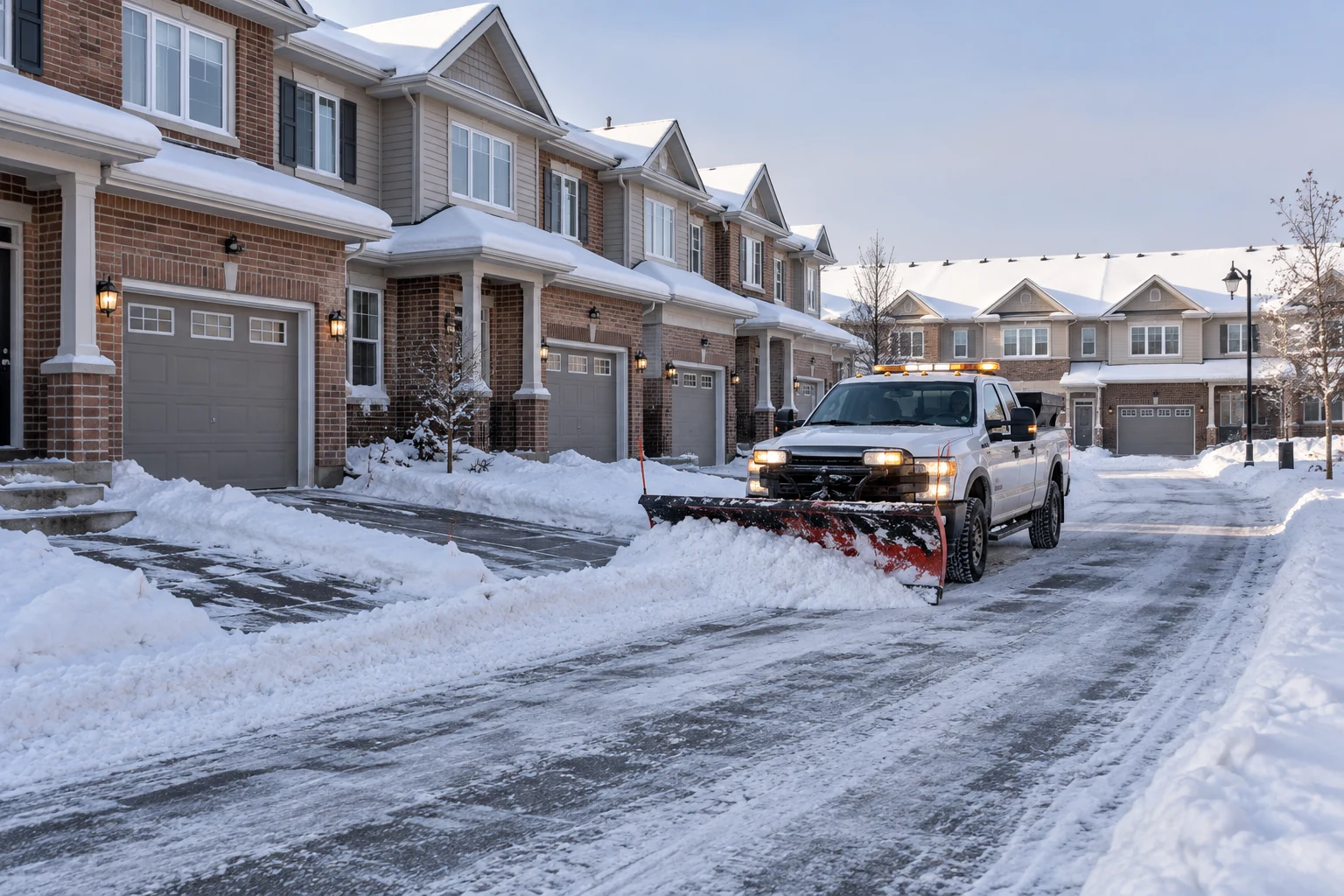
Private roads, visitor parking and individual driveways on one coordinated route.

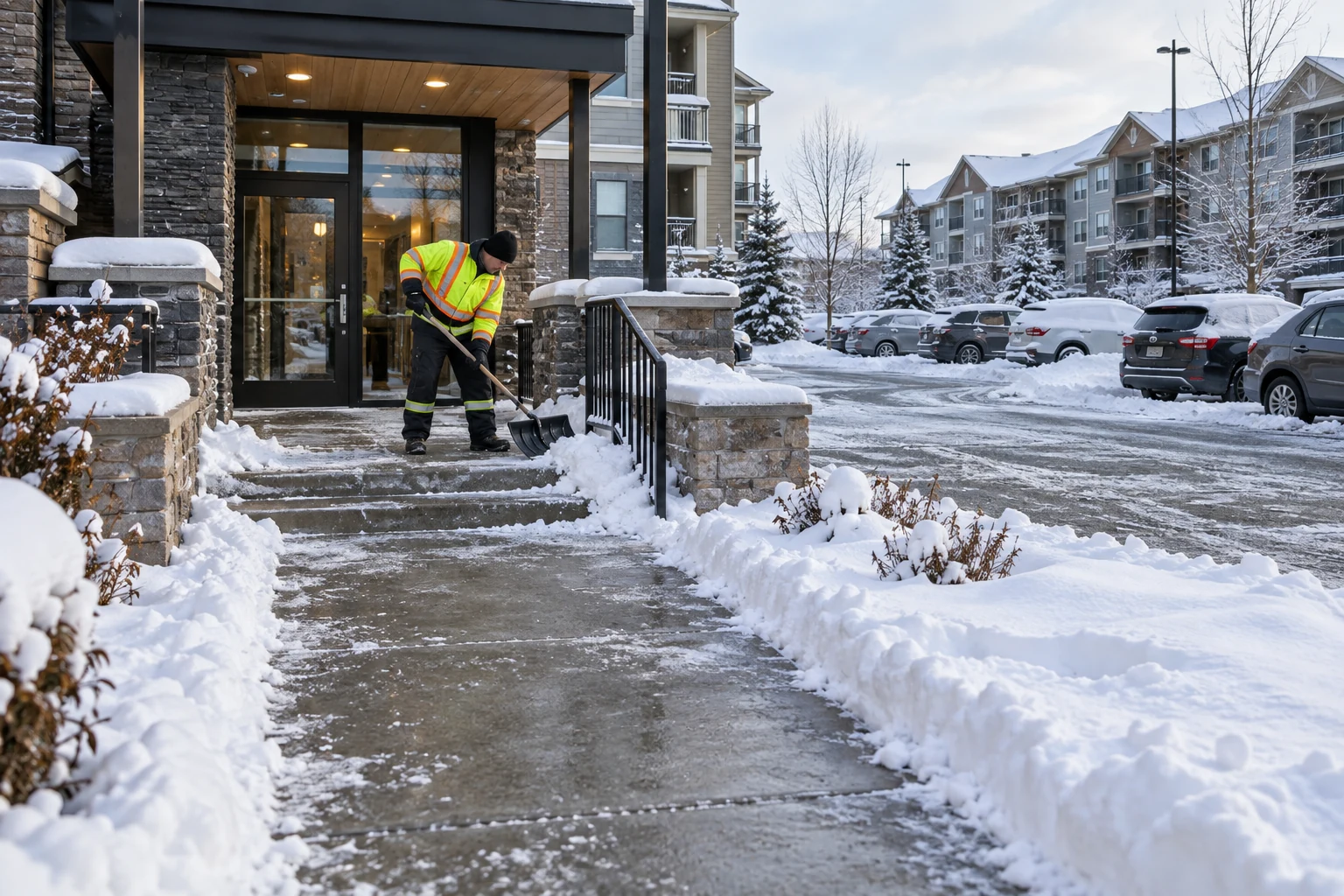
Dedicated sidewalk machines and hand crews for walks, ramps and doorways.

Docks and truck routes kept moving for shift changes and deliveries.
Agree on the level before winter, so expectations and price match.
Crews stay on site through the storm. Bare entrances and walks at all times.
Fully clear by a set time, then re-cleared at agreed depths during business hours.
Cleared at the trigger and after the storm, with re-clears as the agreement states.

After big storms, piles eat parking spaces and block sight lines at exits. Loaders stack them back — or haul them off-site when there is no room left.
Property owners and their snow contractors share responsibility for safe walking surfaces. Time-stamped, GPS-verified visit logs show what was done and when.
In Ontario, written notice of a snow- or ice-related injury claim must be served on the occupier or its snow contractor within 60 days under the Occupiers’ Liability Act. Rules differ by province — this is general information, not legal advice.
Site walks, staking and route planning happen in the fall. Lock in your trigger depth, service window and contract now — not after the first storm.