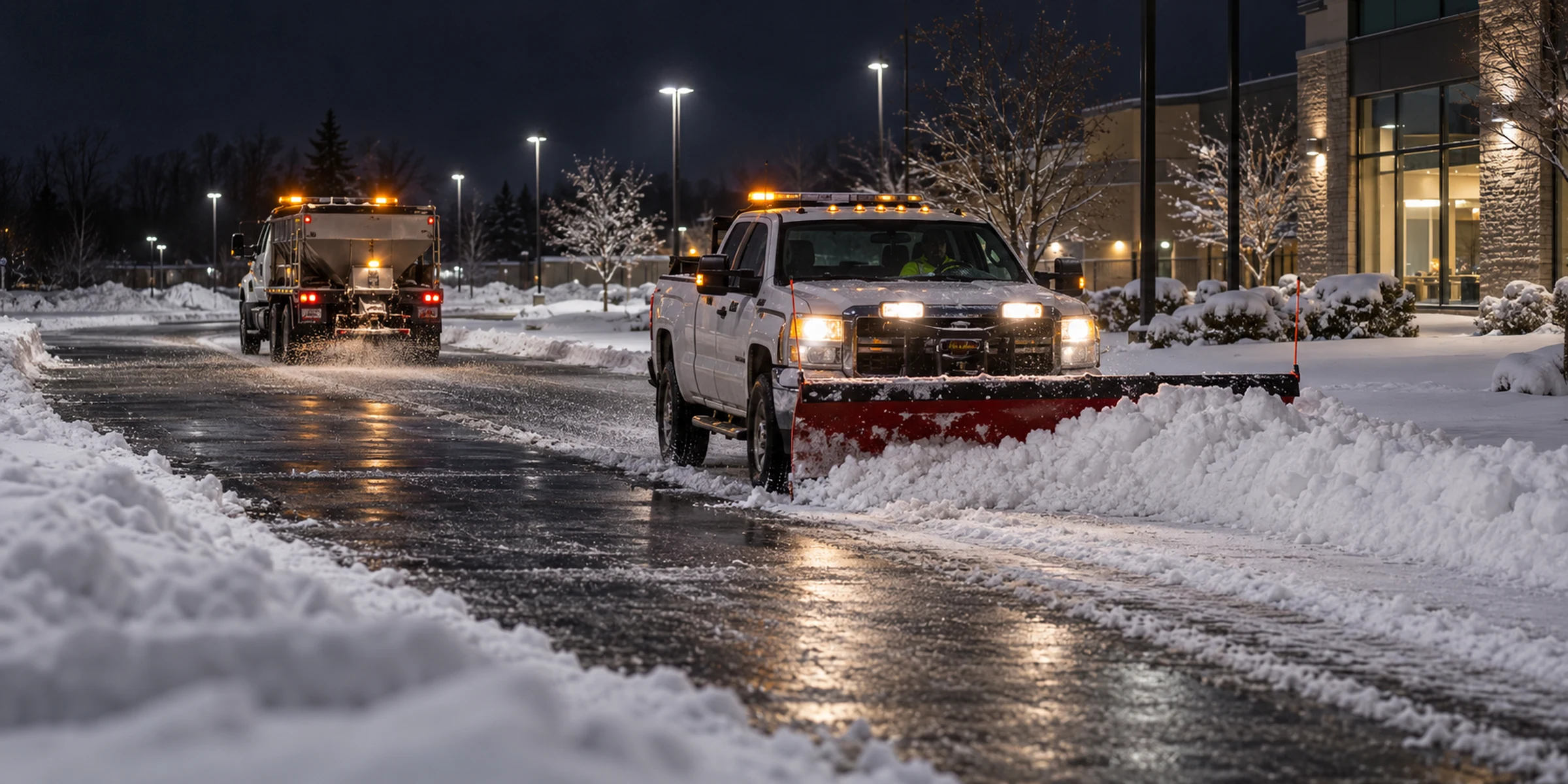
The storm playbook.
How a winter is prepared, run and closed out — month by month, then step by step.
Winter starts in August.
The work that keeps a lot open in January is done months earlier. Here is how a typical Canadian season runs.
Season dates vary by region and agreement. Nov 15 – Apr 15 is a common window.
Eight steps, every property.
The same playbook runs for a single driveway and a 300-stall plaza — only the scale changes.
Site walk & mapping
We walk the property with you before the season.
- Areas to clear and priority zones
- Pile locations away from drains and sight lines
- Hazards: curbs, islands, speed bumps, lighting
Service agreement
Everything agreed in writing.
- Trigger depth and service window
- Re-clears and ice control included
- Contract type and pricing
Pre-season setup
Ready before the first snowfall.
- Staking edges and hazards
- Material storage on large sites
- Routes and crew assignments
Storm monitoring
Forecasts and pavement temperatures tracked.
- Anti-icing ahead of the storm where suitable
- Crews dispatched when the trigger is reached
Clearing
Priority areas first.
- Entrances, fire routes, accessible parking
- Drive aisles and lot, then walkways
- Re-clears during long storms as agreed
Ice management
Treatment matched to conditions.
- Salt, pre-wet salt or blends
- Sand or grit in extreme cold
- Refreeze checks after melt
Logs & reporting
Every visit recorded.
- Arrival and departure times
- Areas cleared and material applied
- Notes on conditions and hazards
Spring cleanup
Closing out the season.
- Sweeping sand and grit
- Reviewing any turf or curb damage
- Planning changes for next winter
Ready your property.
A few things only you can do before the first storm. Tick them off as you go.

Snow removal FAQ.
Still unsure? Ask in your winter plan
What is a trigger depth?
The amount of snow that must build up before crews are dispatched — for example 2 cm or 5 cm. A lower trigger means more visits and a higher seasonal cost.
Do you clear the windrow the city plow leaves?
Yes. Residential service includes clearing the end-of-driveway windrow after the municipal plow passes. Timing depends on when your street is plowed.
Is salting included?
It depends on the agreement. Ice control can be included in the price or billed per application. Your service plan states which, and when it is applied.
What happens during a long storm?
Commercial plans usually include re-clears so entrances and drive aisles stay usable. Residential plans typically clear once snowfall ends or reaches set intervals.
Why does salt sometimes not work?
Rock salt slows sharply at low pavement temperatures. On very cold days, chloride blends or sand for traction work better.
Where does the snow go?
Into agreed pile locations away from drains, hydrants and sight lines. When there is no room left, it is stacked higher or hauled off-site.
Do you keep service records?
Yes. Each visit is logged with times, areas cleared and material applied, and logs can be shared with property managers.
When should we sign up?
Before the first snowfall — ideally in early fall — so the site walk, staking and route planning are done in time.
Routes fill before the first snowfall.
Site walks, staking and route planning happen in the fall. Lock in your trigger depth, service window and contract now — not after the first storm.