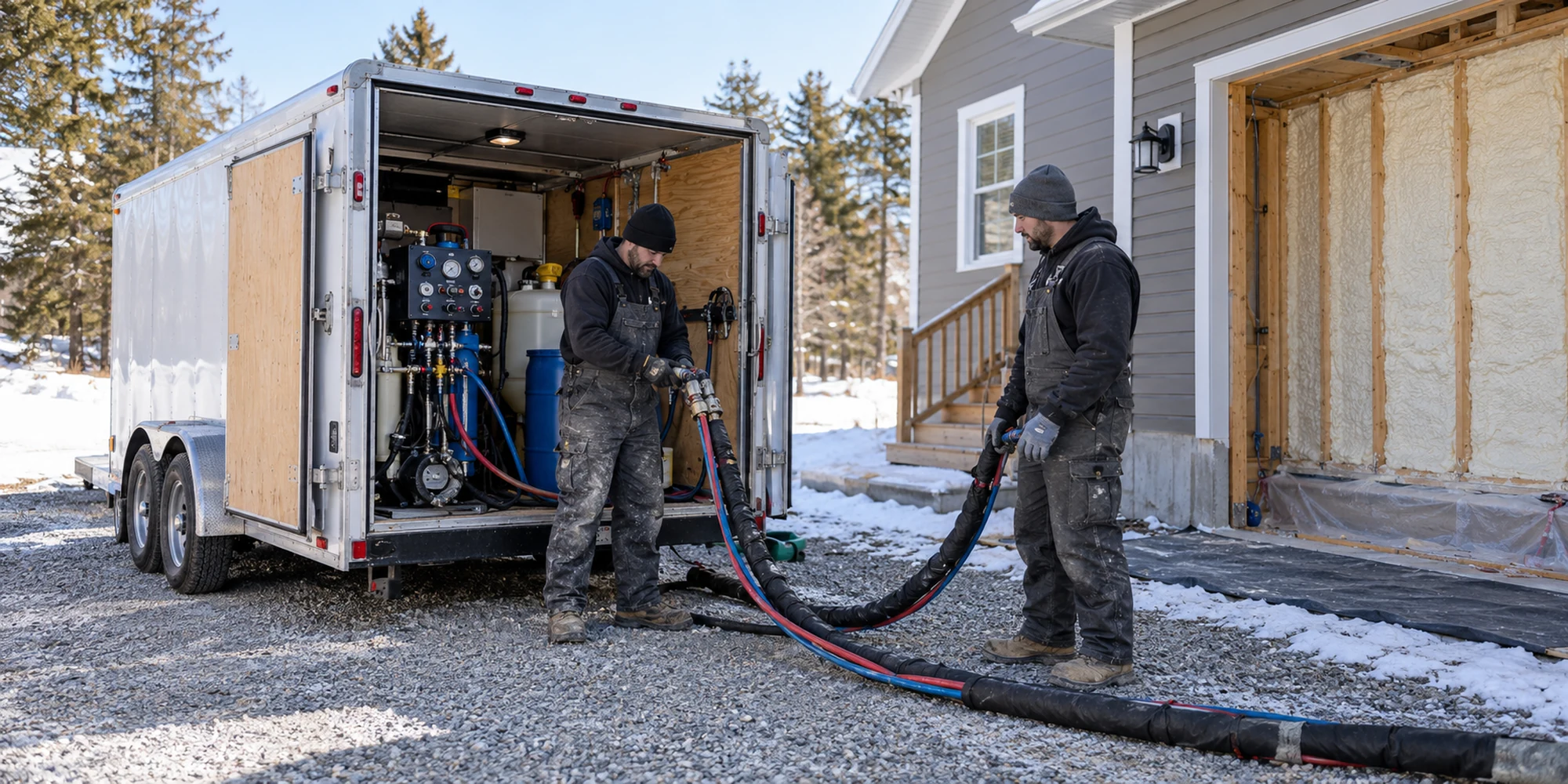
Homes, Farms And Commercial Buildings
Cybertron Spray Foam insulates new builds, renovations, agricultural buildings and commercial properties in Your City and the surrounding region. Our crews arrive with a self-contained spray rig, so we can work in a finished home, a new frame or a remote machine shed.
Every quote starts with the building itself: what it is used for, what it is made of, how it is heated and where moisture can build up. That is what decides the foam, the thickness and the preparation.
- Closed-cell and open-cell systems
- Residential, agricultural, commercial & industrial
- New construction and retrofit
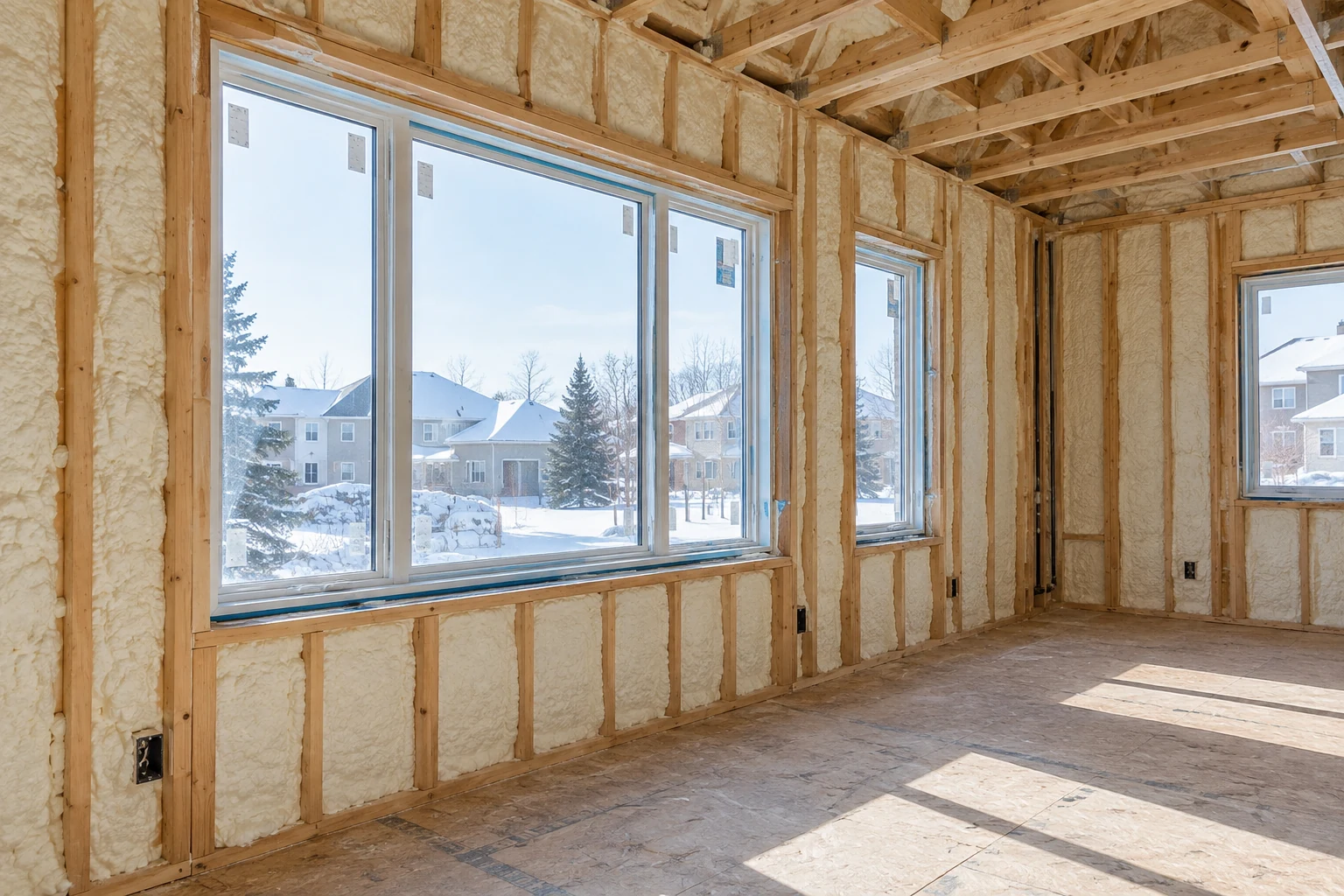
What You Can Expect On Every Job
Clear Written Quotes
Foam type, target thickness, areas covered, barrier requirements and schedule — all in writing.
Safety First
Occupants out during spraying, sealed work areas, ventilation and the manufacturer’s re-occupancy time respected.
Cold-Weather Know-How
Material conditioning, substrate temperature checks and winter-grade products where the job calls for them.
Tidy Sites
Masking and poly protection before we start, trimming and cleanup before we leave.
Checked As We Go
Depth and temperature readings during application, with a walkthrough before handover.
Honest Advice
If spray foam is not the best fit for part of a building, we will say so and explain the alternatives.
How Spray Foam Is Regulated
In Canada, spray foam has both a material standard and an installation standard. Medium-density closed-cell foam is covered by CAN/ULC-S705.1 (material) and CAN/ULC-S705.2 (installation); light-density open-cell foam by CAN/ULC-S712.1 and S712.2.
These standards are referenced by the National Building Code and the provincial codes based on it. They require certified installers working for licensed contractors under a third-party quality assurance program, with site records for each job.
Foam in occupied spaces also generally needs a thermal barrier such as drywall; some attics and crawl spaces may allow an approved ignition barrier instead. Your local building official has the final say.
Ask us for the installer certification and product evaluation details for your specific job.
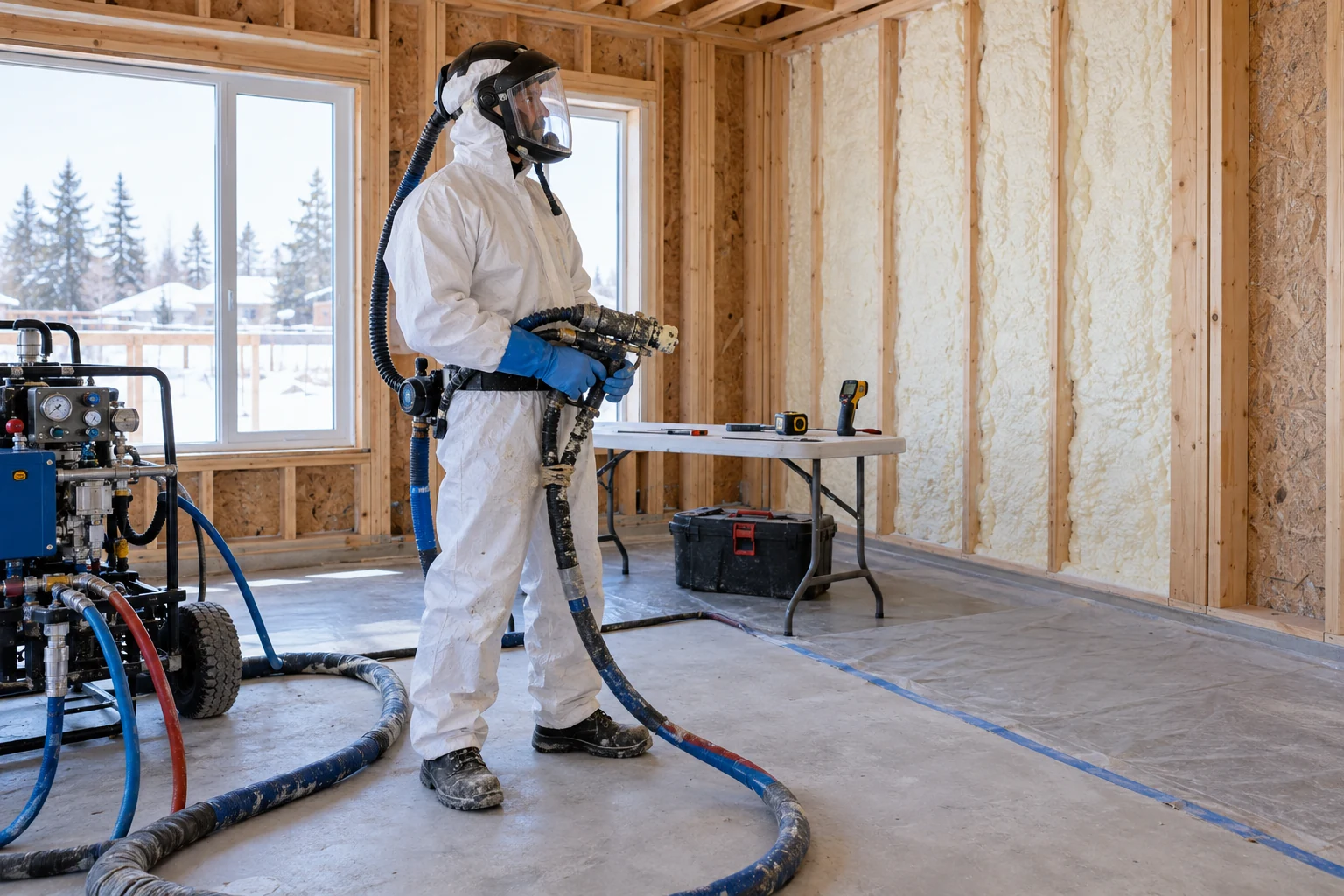
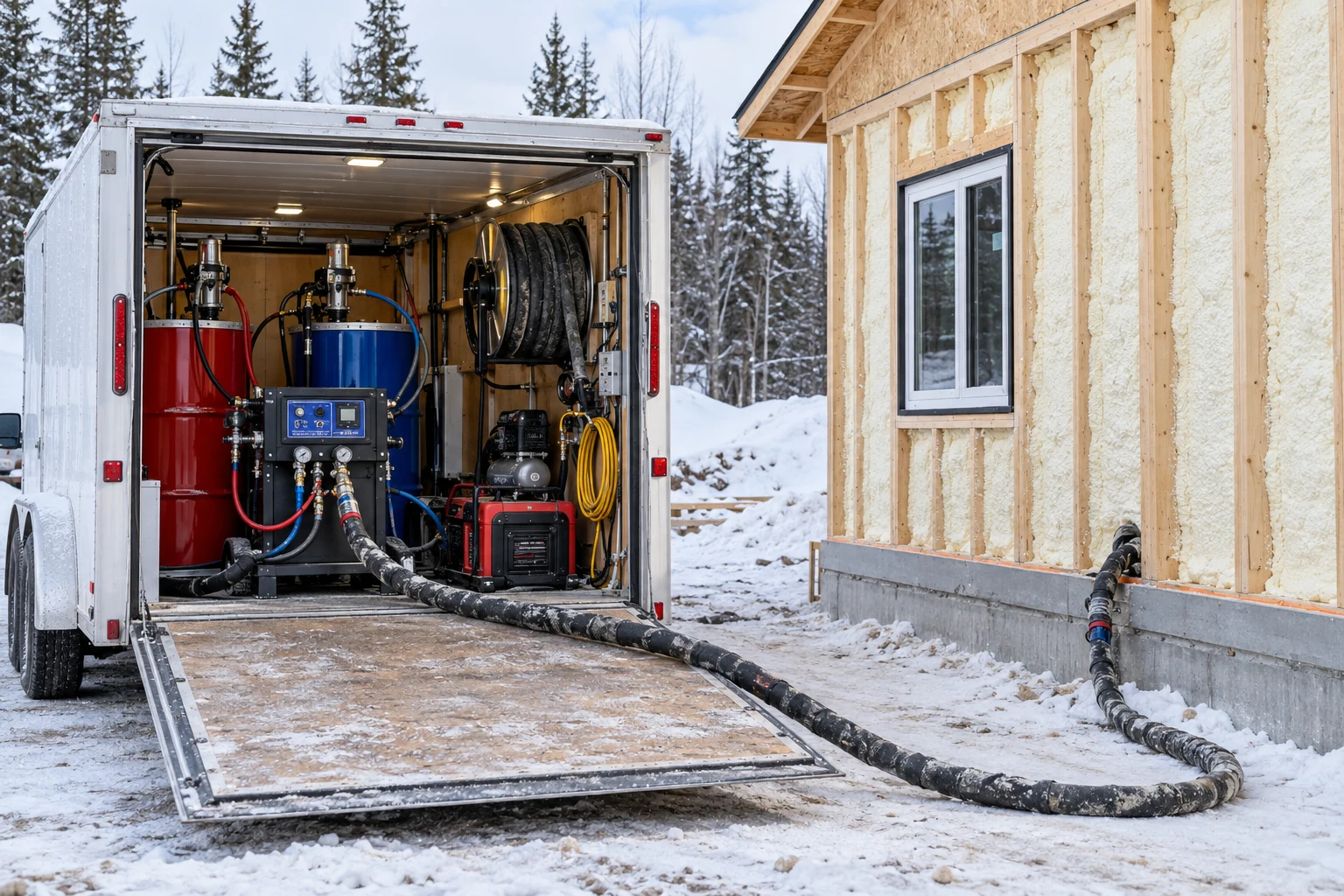
A Complete Spray Rig On Every Job
Spray foam is made on site: two liquid components are heated, metered and mixed at the gun. Getting that right depends on the equipment.
- Proportioner (reactor) — Heats the two liquid components and pumps them at a fixed ratio to the gun.
- Heated hose — Keeps both components at spray temperature on the way to the gun — important in cold weather.
- Spray gun — Mixes the two components at the tip and applies the foam in controlled passes.
- Transfer pumps & drum heaters — Move material from the drums and keep it conditioned before spraying.
- Generator, compressor & air dryer — Power and clean, dry air for the rig, so it can work on sites without a suitable power supply.
- Supplied-air respirators & PPE — Full protective suits, gloves and respiratory protection for the spray crew.
- Depth gauge & IR thermometer — Thickness checks and substrate/foam temperature readings during application.
- Moisture meter & hygrometer — Checks that surfaces are dry and conditions suit the product before we spray.
Get A Clear, Written Spray Foam Estimate
Tell us the building type, the areas you want insulated and your timeline. We will recommend the right foam, thickness and schedule for your building.