Homes, Cottages & Additions
Spray foam is most valuable where conventional insulation struggles: tight cavities, cold concrete, air leaks at the rim joist and roofs without an attic.
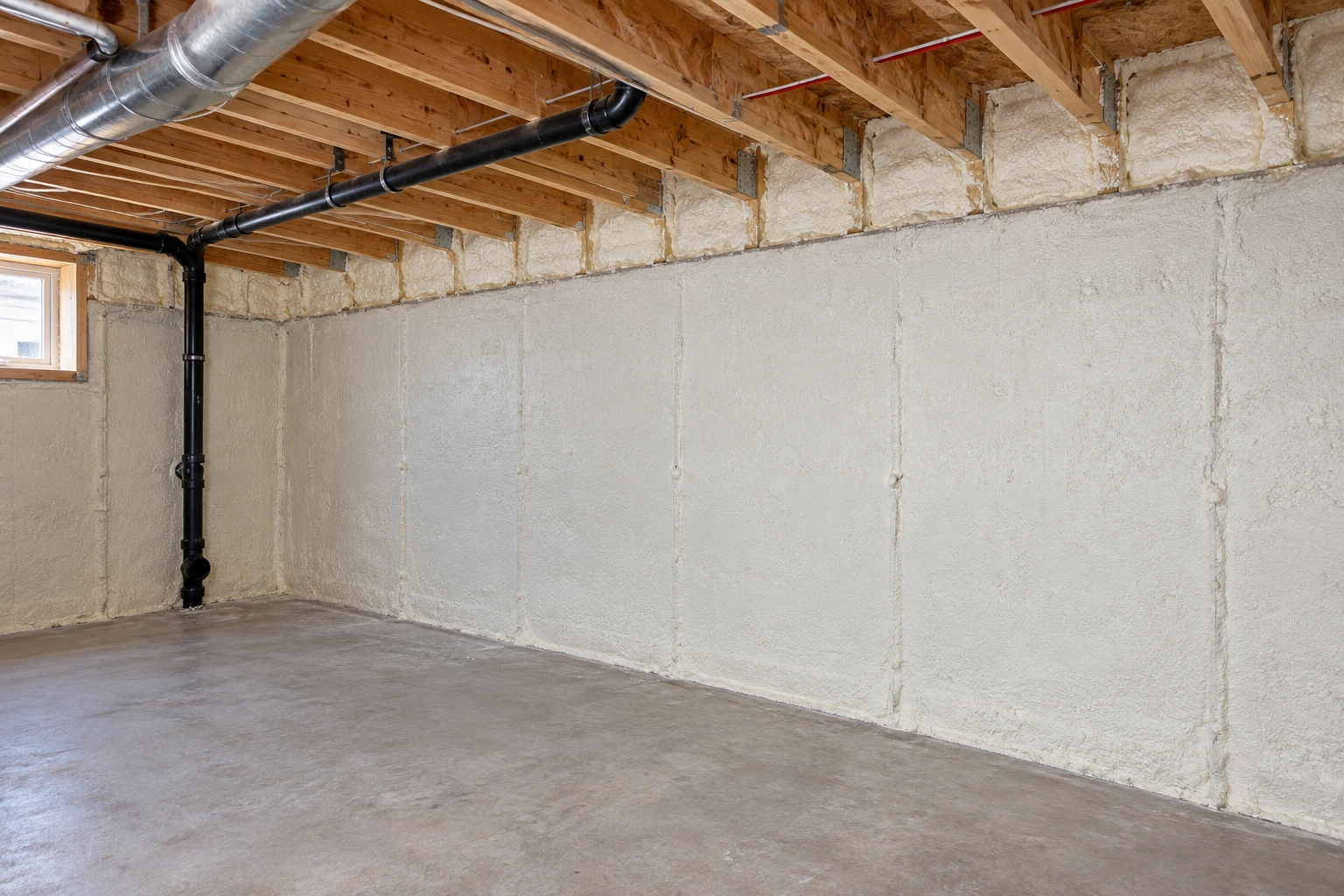
- Basement walls & rim joists
- Exterior walls in new builds and additions
- Cathedral ceilings & attic rooflines
- Crawl spaces & cantilevered floors
- Garages, workshops & bonus rooms over garages
- Cottages and seasonal homes
Basements & Rim Joists
Closed-cell foam on concrete and at the rim joist — one of the most effective air-sealing upgrades in older homes.
Walls & Additions
Closed-cell in exterior walls of new construction and renovations where walls are open to the studs.
Attics & Rooflines
Open-cell or closed-cell under the roof deck for conditioned attics and cathedral ceilings.
Crawl Spaces
Foam on crawl-space walls to reduce cold floors and ground moisture problems.
Garages & Workshops
Insulation and air sealing for heated garages and rooms above them.
Sound Control
Open-cell foam in interior walls and floors to reduce noise between rooms.
Barns, Sheds & Farm Buildings
Farm buildings are large, often steel-clad and full of moisture from animals, crops or equipment. Closed-cell foam insulates and stops condensation dripping from cold steel.
- Machine sheds & equipment storage
- Livestock barns & poultry buildings
- Potato, grain & produce storage
- Heated shops & farm offices
- Quonset and arch-rib steel buildings
- Pole barns & post-frame buildings
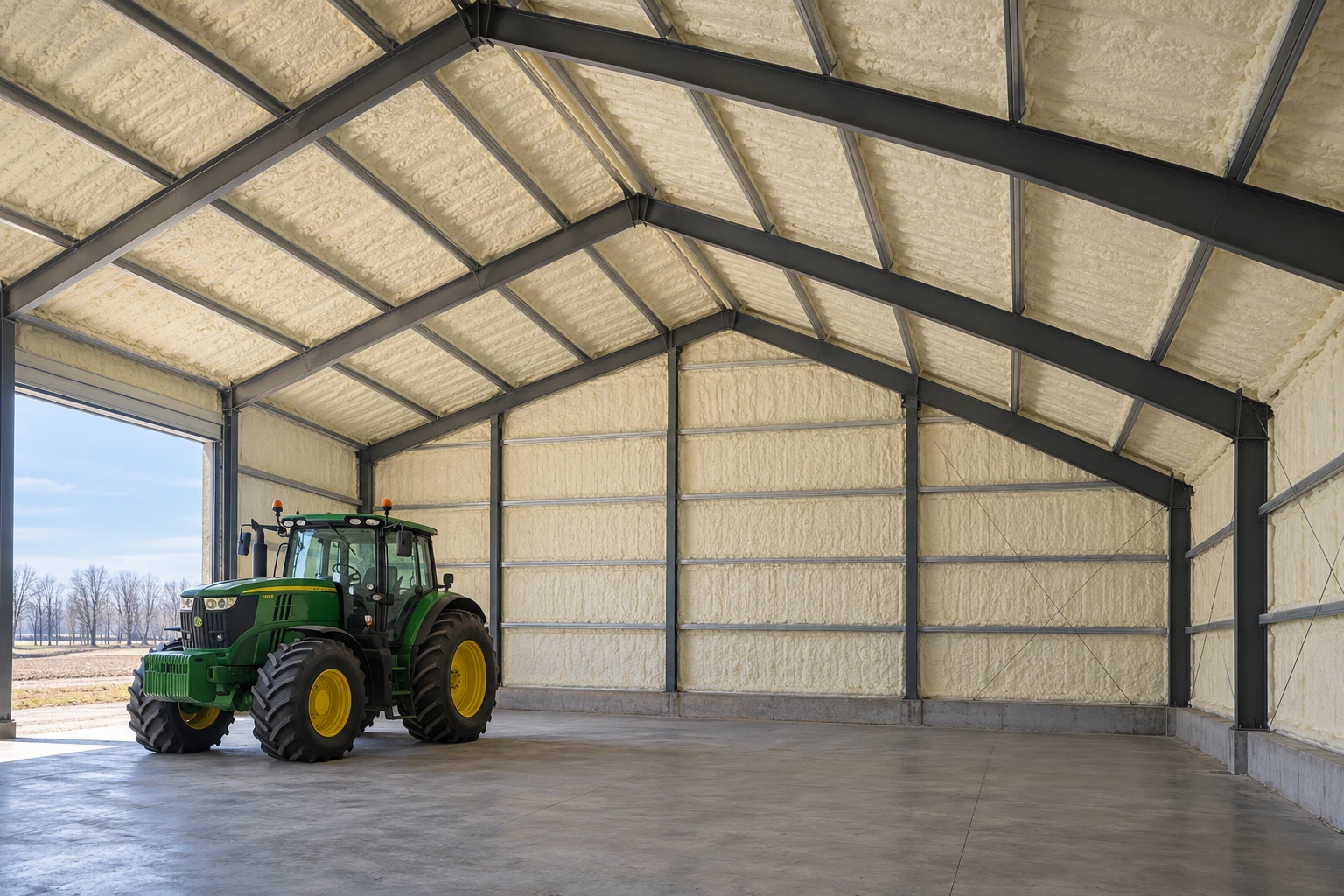
Condensation Control
Foam on steel roof and wall panels keeps warm, moist air from reaching the cold metal.
Livestock Buildings
Moisture-resistant insulation for barns where humidity is high year-round.
Storage Buildings
Steadier temperatures for crop, feed and equipment storage through freeze-thaw cycles.
Quonsets & Arch Buildings
Foam follows the curve of arch-rib steel buildings where batts are hard to fit.
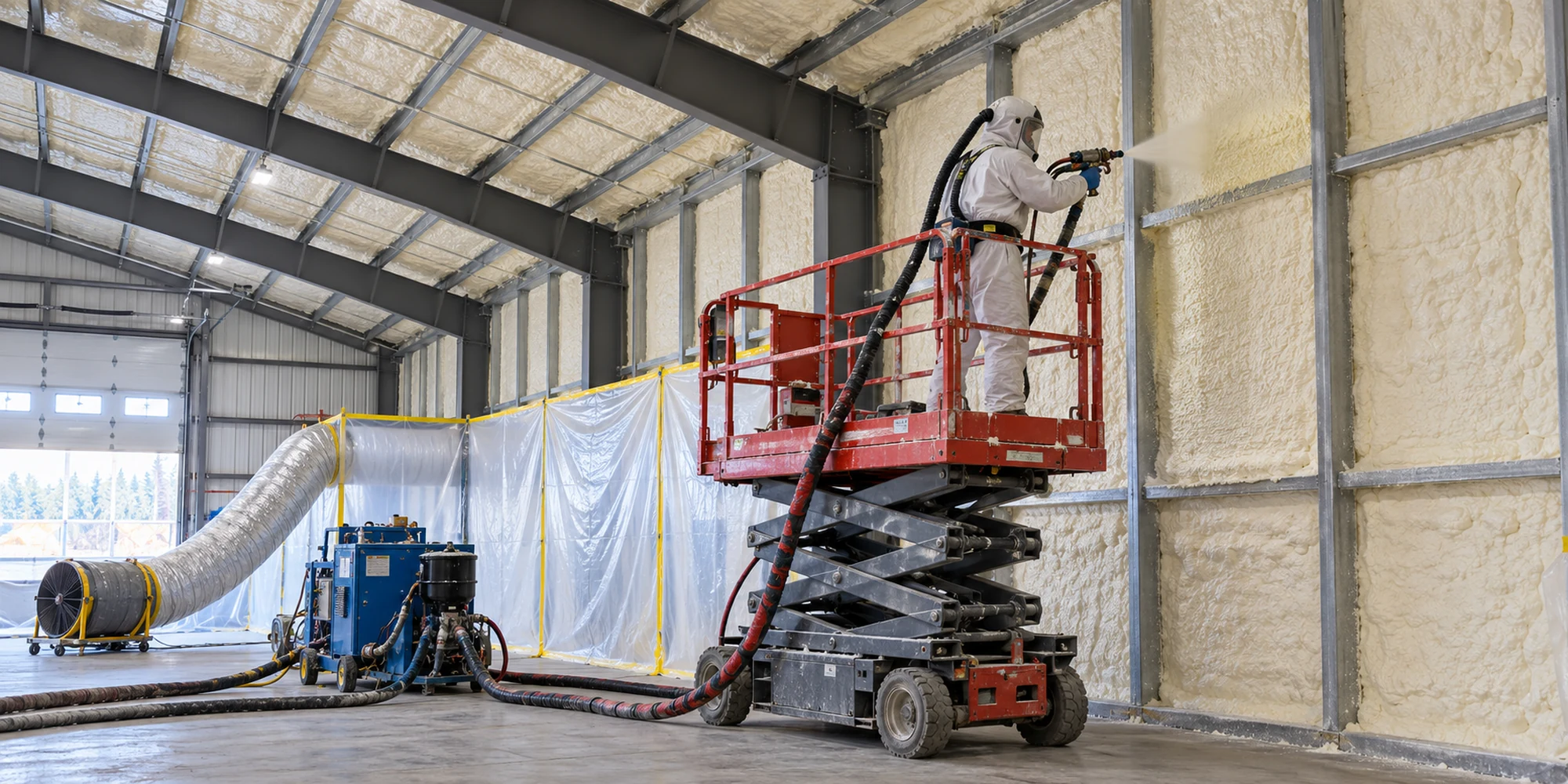
Warehouses, Offices & Metal Buildings
Commercial jobs are about coverage, scheduling and working around operations. We plan phasing, access and ventilation with the building owner before spraying.
- Warehouses & distribution buildings
- Pre-engineered metal buildings
- Retail units & office renovations
- Cold storage & walk-in rooms
- Flat roofs — spray foam roofing with protective coating
- Tenant fit-outs & additions
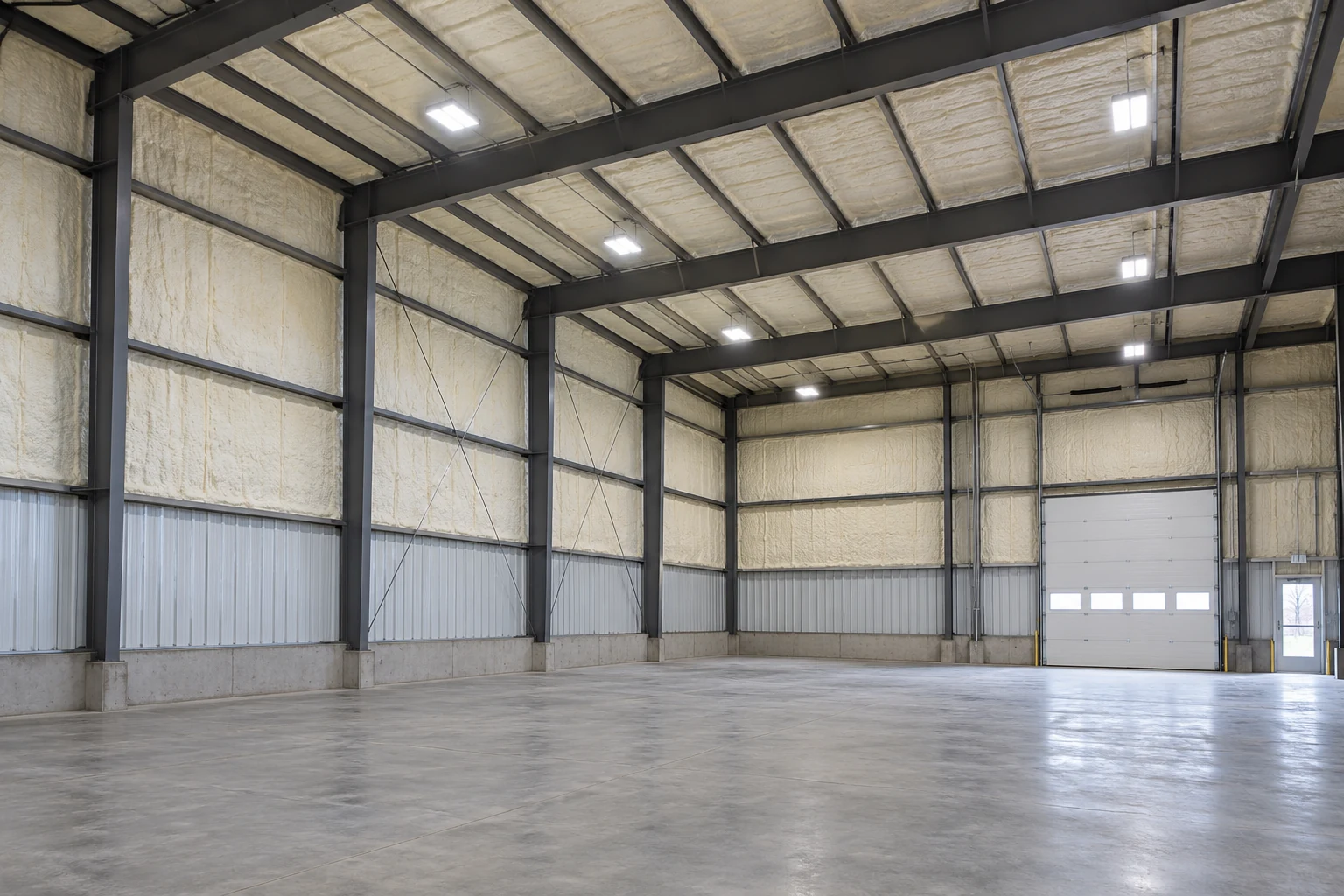
Metal Buildings
Closed-cell foam on steel walls and roof panels, including around purlins and girts.
Cold Storage
Seamless foam lining for walk-in coolers and temperature-controlled rooms.
Flat Roofs
Spray foam roofing over suitable low-slope roofs, protected by a UV-resistant coating.
Phased Work
Scheduling around business hours and occupied areas.
Plants, Tanks & Process Buildings
Industrial sites need insulation that handles moisture, temperature swings and site safety rules. We work to the site’s safety program and permits.
- Process and production buildings
- Tanks and vessels (where suitable)
- Pipe and duct insulation (where suitable)
- Cold rooms & freezer buildings
- Site safety orientation and permits followed
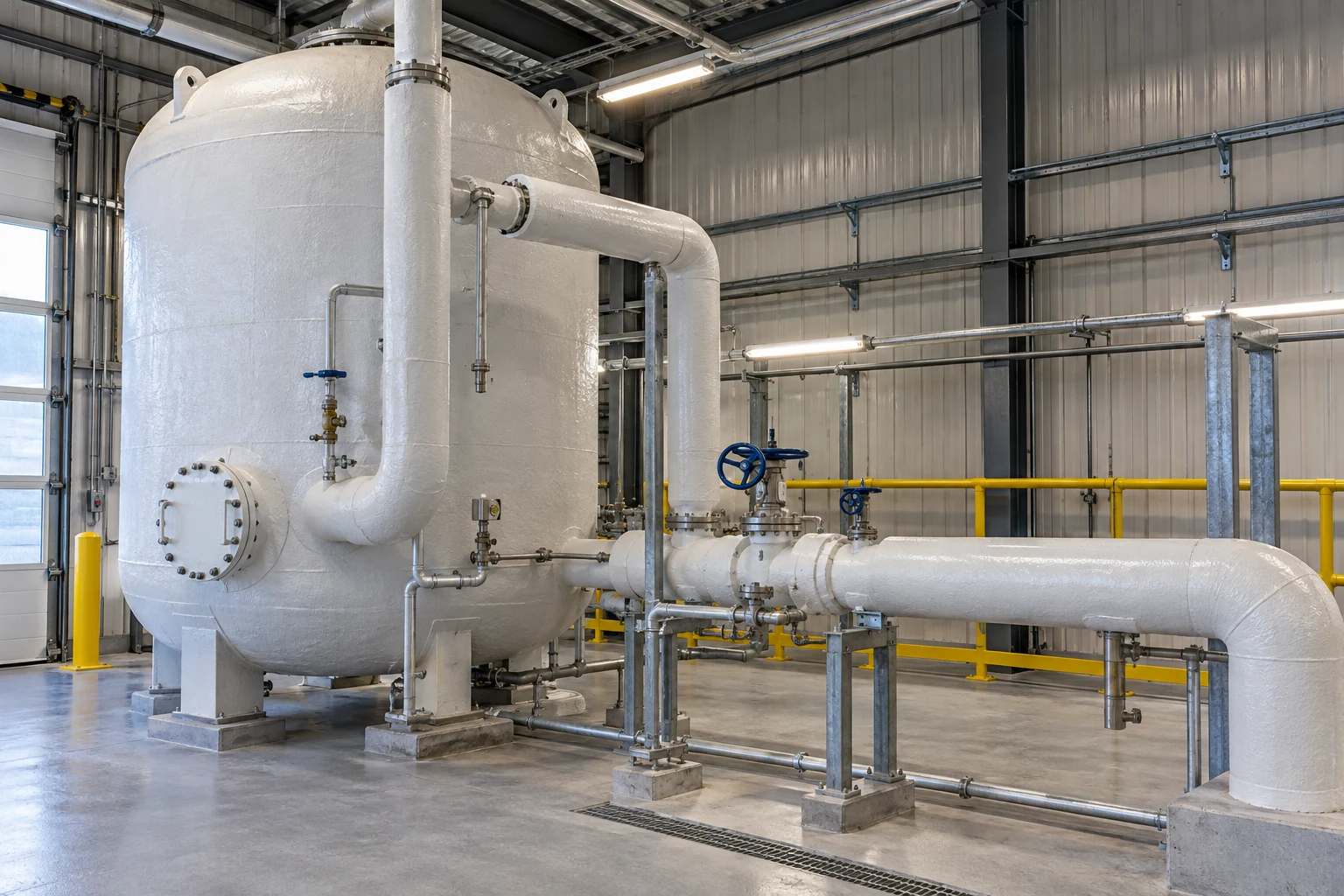
Process Buildings
Insulation and air sealing for large interior volumes.
Tanks & Piping
Foam can be suitable on some tanks and pipes, depending on temperature and coating needs.
Site Safety
Crews follow the site’s safety orientation, lockout and permit requirements.
Closed-Cell vs Open-Cell Spray Foam
Typical values vary by product — the exact figures come from each product’s evaluation report.
| Property | Closed-cell (medium density) | Open-cell (light density) |
|---|---|---|
| Density | About 2 lb/ft³, rigid | About 0.5 lb/ft³, soft and flexible |
| R-value per inch | Roughly R-5.5 to R-6+ (long-term value varies by product) | Roughly R-3.5 to R-4 |
| Air barrier | Yes, at the minimum thickness in its evaluation | Yes, at sufficient thickness |
| Vapour control | Acts as a vapour barrier at sufficient thickness (often about 2″) | Vapour permeable — a separate vapour barrier is usually needed |
| Moisture | Resists water — suited to basements, crawl spaces, steel buildings | Absorbs water — for dry, interior locations |
| Canadian standard | CAN/ULC-S705.1 & S705.2 | CAN/ULC-S712.1 & S712.2 |
| Typical uses | Foundations, rim joists, exterior walls, metal & farm buildings, cold storage | Attic rooflines, interior walls, sound control |
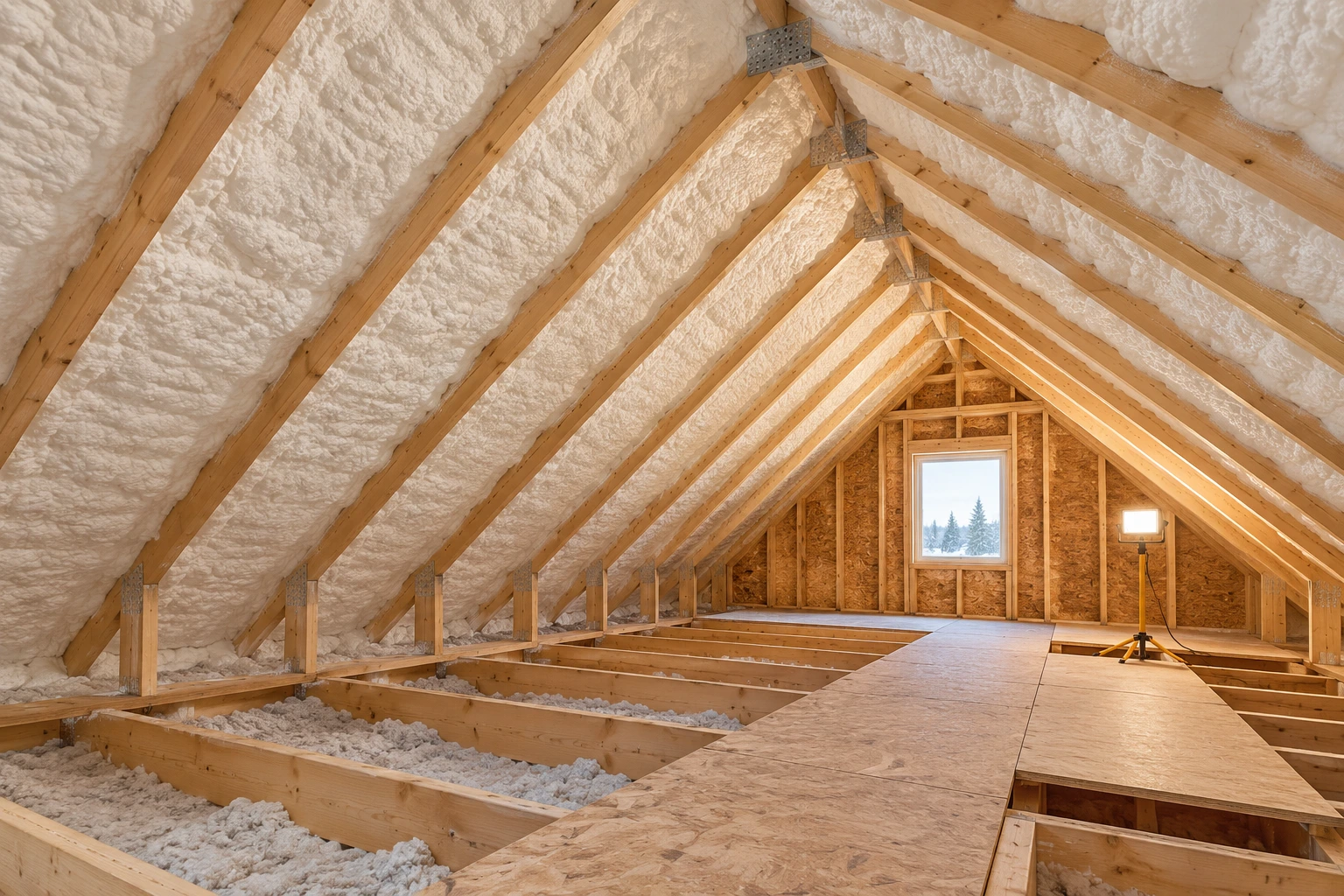
Thermal & Ignition Barriers
Spray foam is combustible, so the building code generally requires it to be covered by a thermal barrier, such as drywall, where it faces occupied space. In some attics and crawl spaces an approved ignition barrier coating may be permitted instead.
We identify the barrier each area needs in your quote and coordinate the coating or drywall with you or your builder.
Get A Clear, Written Spray Foam Estimate
Tell us the building type, the areas you want insulated and your timeline. We will recommend the right foam, thickness and schedule for your building.