Basement waterproofing that fixes the cause
Exterior membranes, interior drainage systems and crack injection — matched to your foundation, your soil and where the water is really coming from.
Outside, inside, or a single crack?
The right method depends on how much of the foundation is affected, whether the basement is finished, and what the drainage around it is doing.
| Method | How it works | Best for | Trade-offs |
|---|---|---|---|
| Exterior waterproofing | Excavate to the footing, clean the wall, apply a membrane and drainage board, install new weeping tile in clean stone, backfill and re-grade. | Failed weeping tile, whole-wall seepage, block or older foundations, high water pressure. | Most disruptive and most costly; landscaping, decks and walkways may be affected. |
| Interior drainage | Cut the slab along the walls, lay a perimeter drain to a sump pit, add a wall drainage membrane, and re-pour. | Finished lots with no exterior access, tight side yards, lower budgets. | Manages water after it reaches the wall; relies on the sump pump and power. |
| Crack injection | Low-pressure polyurethane (or epoxy for structural bonding) injected through ports from inside. | Isolated cracks in poured concrete where drainage is otherwise working. | Not a fix for failed weeping tile or block walls. |
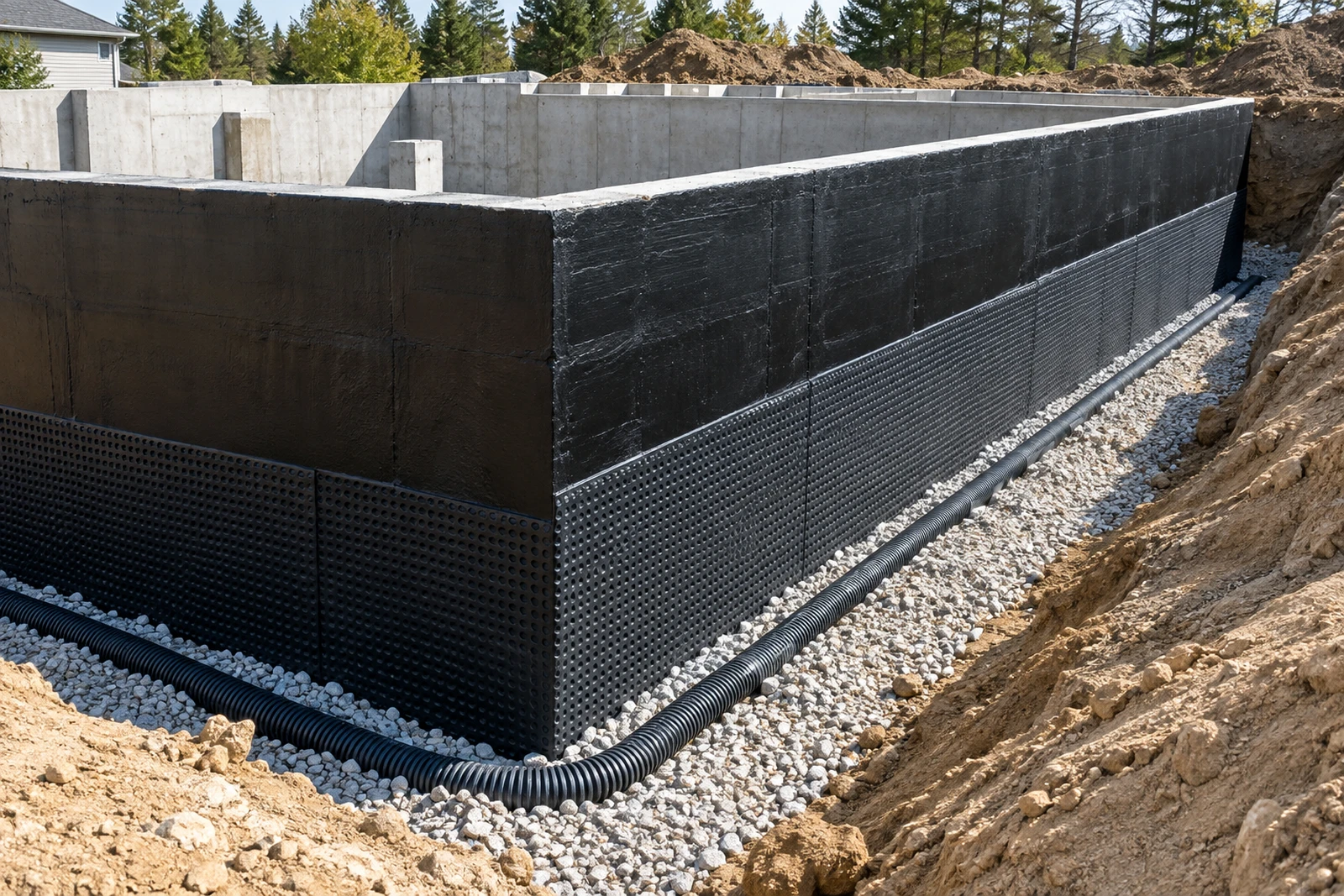
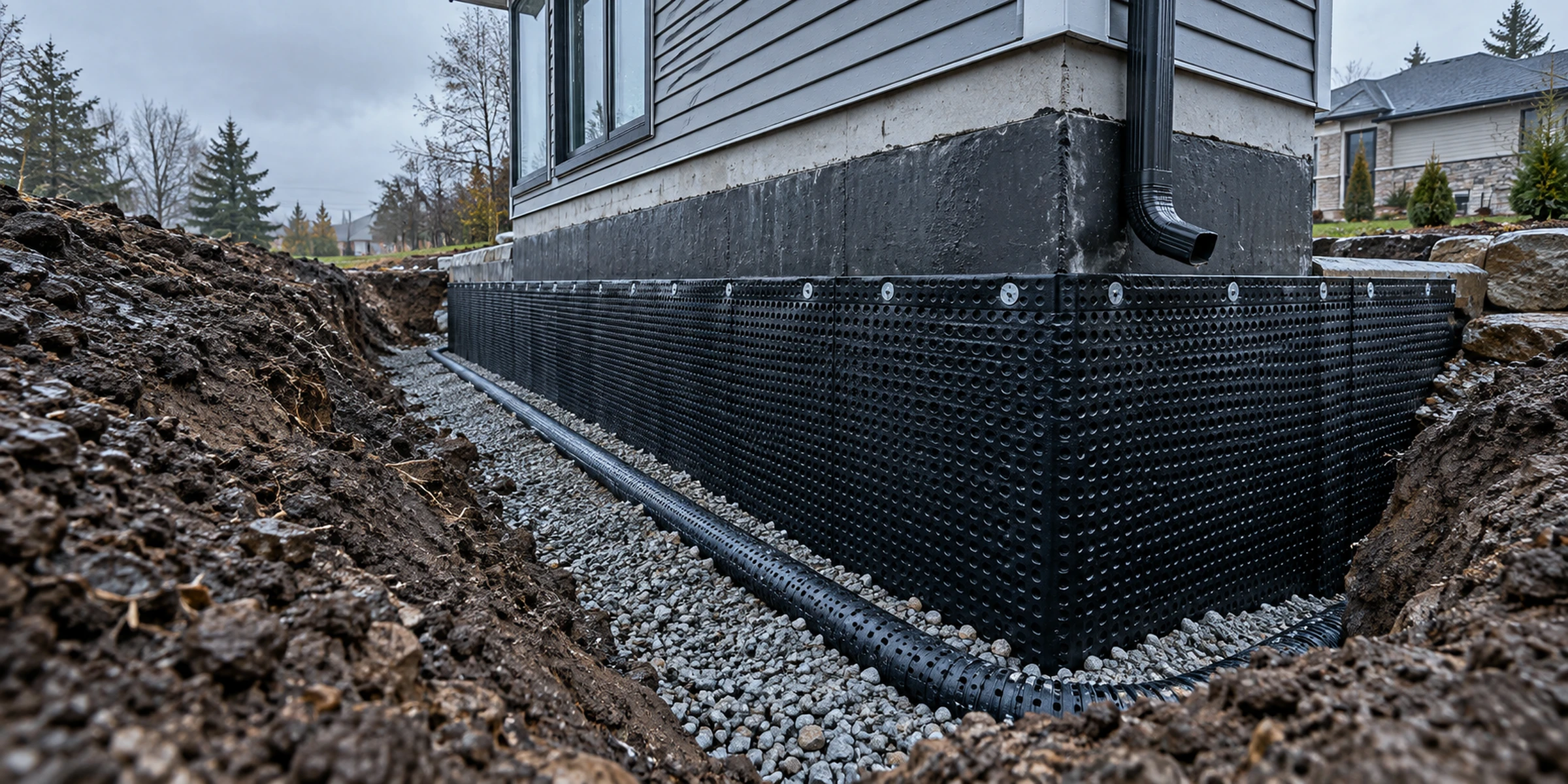
Stopping water at the outside of the wall
Excavation goes down to the footing. The wall is cleaned and repaired, then a waterproof membrane and dimpled drainage board go on, with new weeping tile set in clean stone. Backfill is placed in lifts and the surface is re-graded to slope away.
- Membrane plus drainage board
- New weeping tile with filter sock
- Frost-depth details for Canadian winters
- Final grading away from the wall
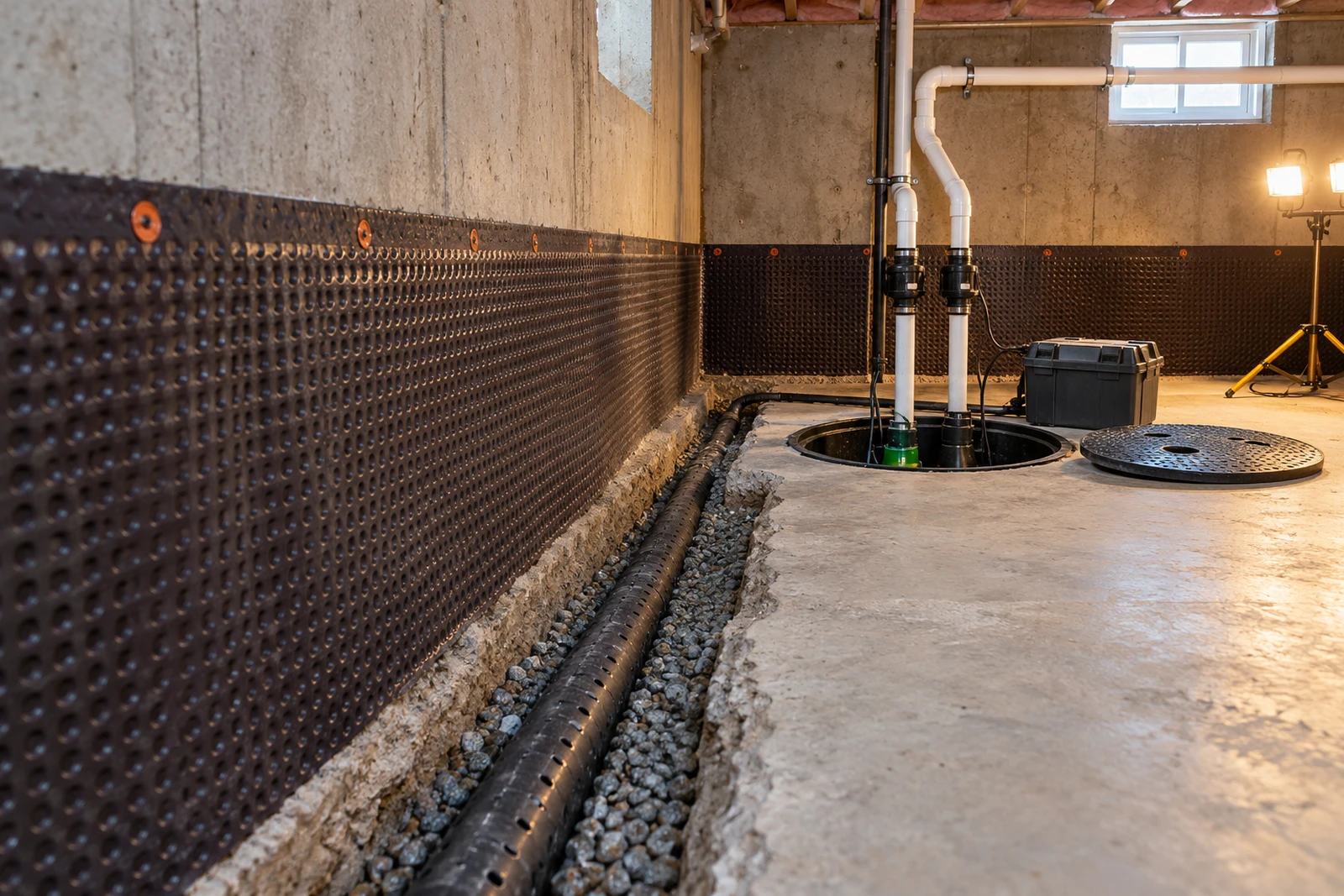
Managing water from the inside
When excavation is impractical, a drain along the inside of the footing collects water and carries it to a sump pit. A wall membrane directs seepage down into the drain.
- Perimeter drain under the slab
- Sump pit, pump and check valve
- Battery backup recommended
- Less disruption outside
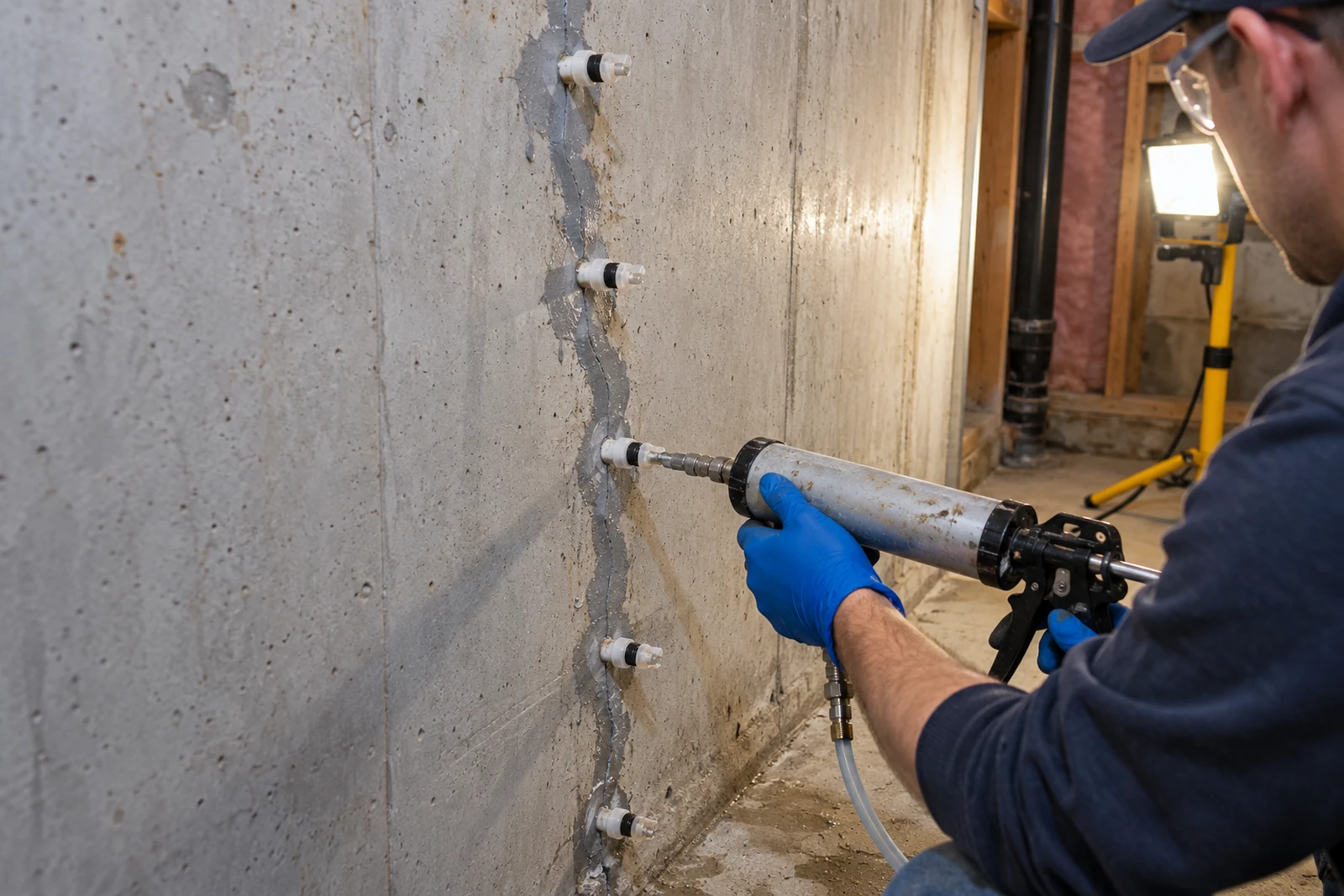
Sealing a single leaking crack
Poured concrete shrinks as it cures, and hairline cracks are common. Low-pressure polyurethane expands to fill a leaking crack through the wall and stays flexible as the foundation moves with the seasons.
- Polyurethane for leaking, non-structural cracks
- Epoxy where a crack needs structural bonding
- Engineer review for wide or displaced cracks
What your foundation is made of changes the fix
Canadian homes built across different decades have very different basements.
Most post-1970 homes
Leaks are usually at cracks, tie-rod holes and the floor–wall joint. Injection often works when drainage is sound.
Many mid-century homes
Hollow cores hold water and mortar joints leak. Exterior waterproofing or interior drainage is usually needed.
Older and heritage homes
Rubble or brick foundations need careful, breathable approaches; interior sealers alone rarely hold.
Work is planned to the relevant provincial building code and any permits your municipality requires.
Not sure where the water is coming from?
A water assessment traces it from the roofline to the sewer line before anyone quotes a fix.