Flood protection subsidies, explained
Many Canadian cities help homeowners pay for backwater valves, sump pumps and drain disconnections. Here is how those programs usually work.
What municipal programs typically cover
Every city sets its own rules, amounts and deadlines. Check your municipality’s current program before booking work.
Backwater valves
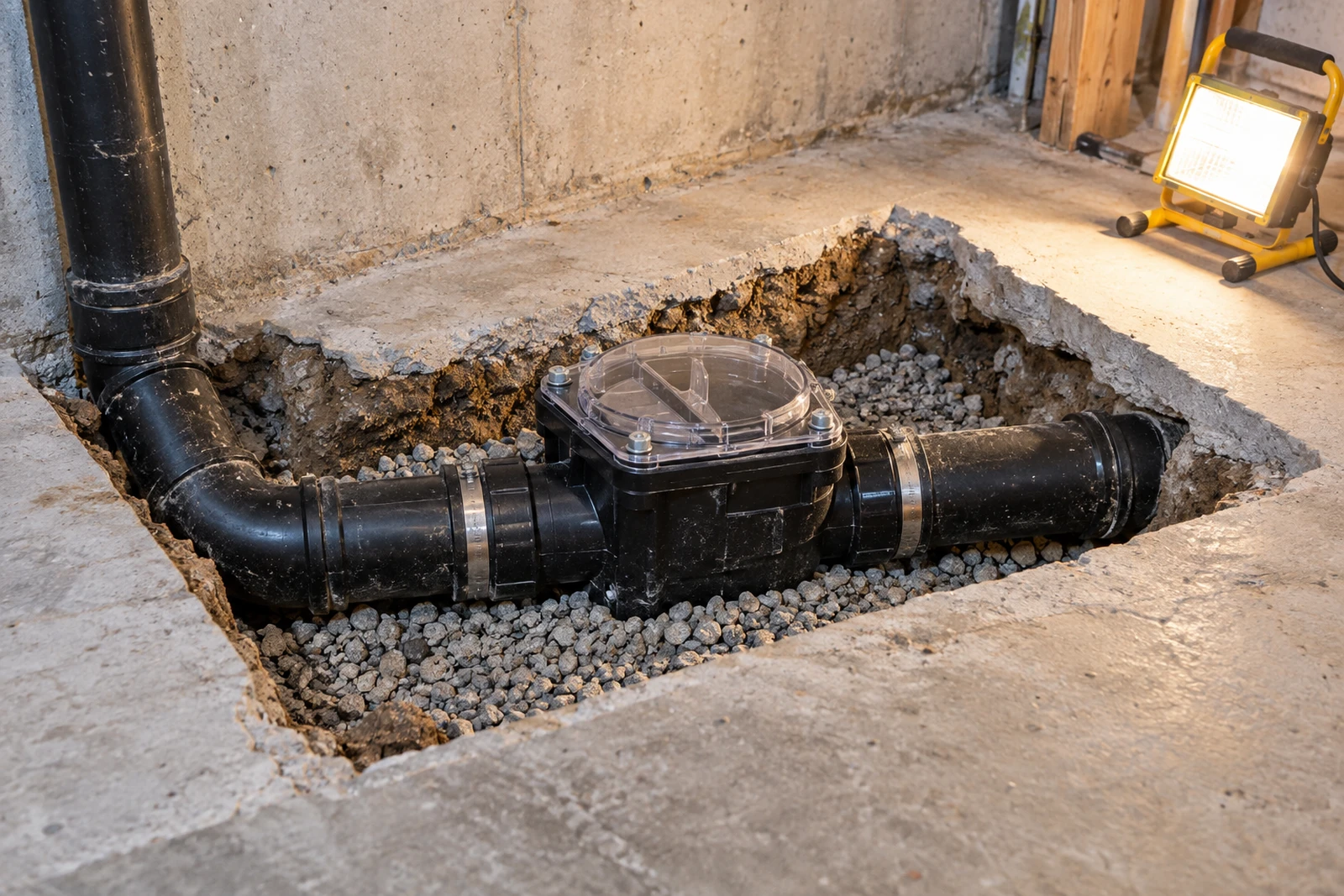
Installed on the main sewer line to stop sewer backup, usually with a permit and inspection.
Sump pumps
Often paired with disconnecting the weeping tile from the sewer, sometimes with backup power.
Pipe severance & capping
Disconnecting old storm or weeping tile connections from the sanitary sewer.
Toronto’s expanded 2026 program
As of May 1, 2026, the City of Toronto offers up to $6,650 per eligible property for flood-protection work completed on or after November 12, 2025, including backwater valves, sump pumps, battery backup and pipe severance. Work must be done by properly licensed contractors, and backwater valves require a building permit and inspection.
Figures are from the City’s program as of 2026 and can change — always confirm on the official program page.
What a subsidy application usually needs
Most programs reimburse after the work, so paperwork matters as much as the installation.
Check eligibility first
Property type, ownership and whether the program is currently open.
- Confirm the current program rules
- Note any pre-approval step
Permits & inspection
Plumbing work like backwater valves normally needs a permit and a passed inspection.
- Permit applied for before work
- Inspection before the floor is closed
Itemized invoices
Programs typically want labour, materials, permits and taxes shown separately, with device models.
- Itemized, dated invoices
- Photos of installed devices
Insurance
Some insurers offer discounts or require protection devices for sewer-backup coverage.
- Tell your insurer about new devices
- Keep documents together
Not sure where the water is coming from?
A water assessment traces it from the roofline to the sewer line before anyone quotes a fix.