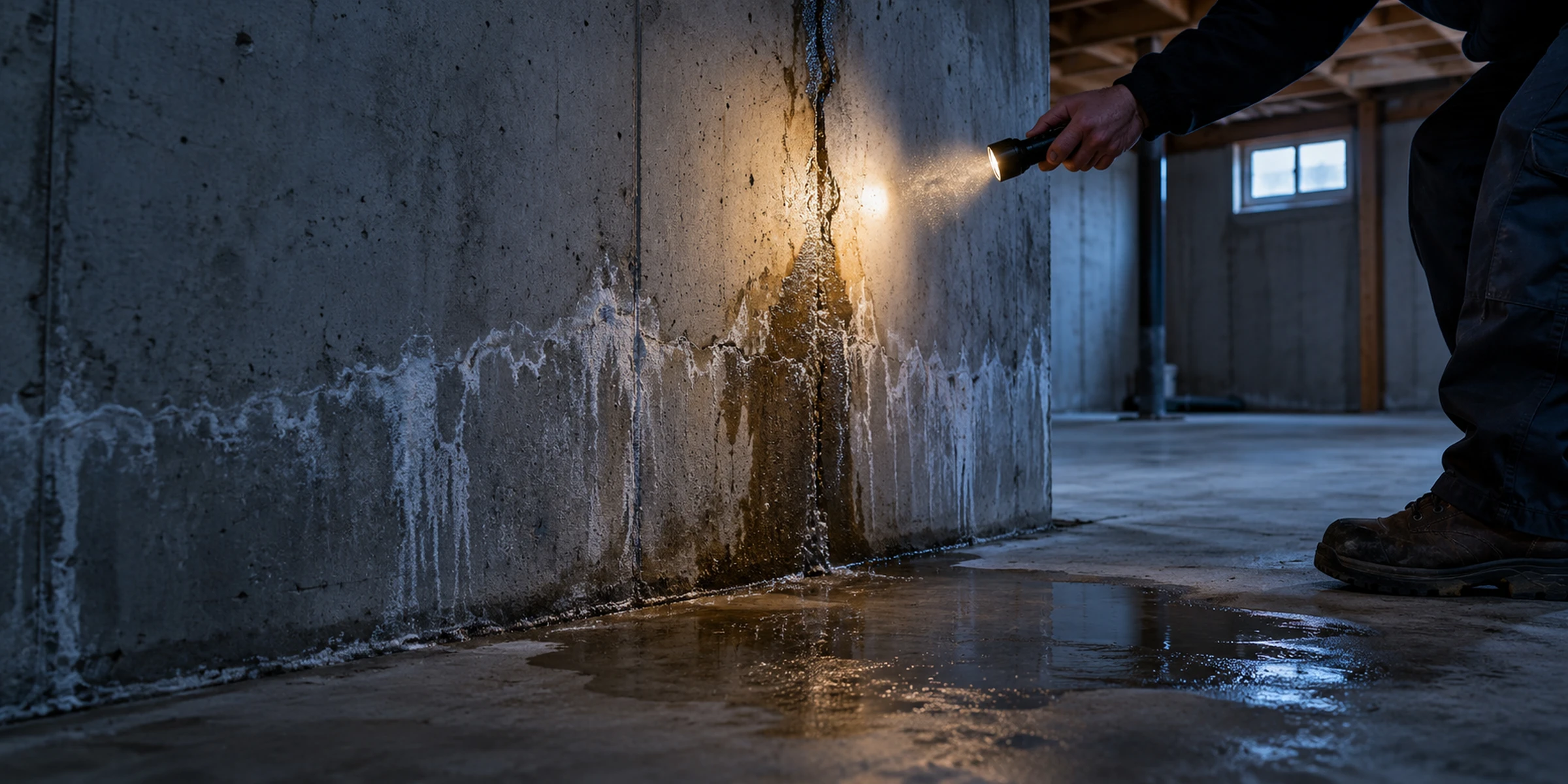
Where is the water coming from?
Tell us what you are seeing. We will show the most likely sources and what usually fixes them — before anyone quotes you a solution.
Select everything you have noticed
This is a guide, not a diagnosis. An on-site assessment confirms the source.
Likely sources
No symptoms selected yet
Select one or more symptoms to see the most likely causes.
Book A Water Assessment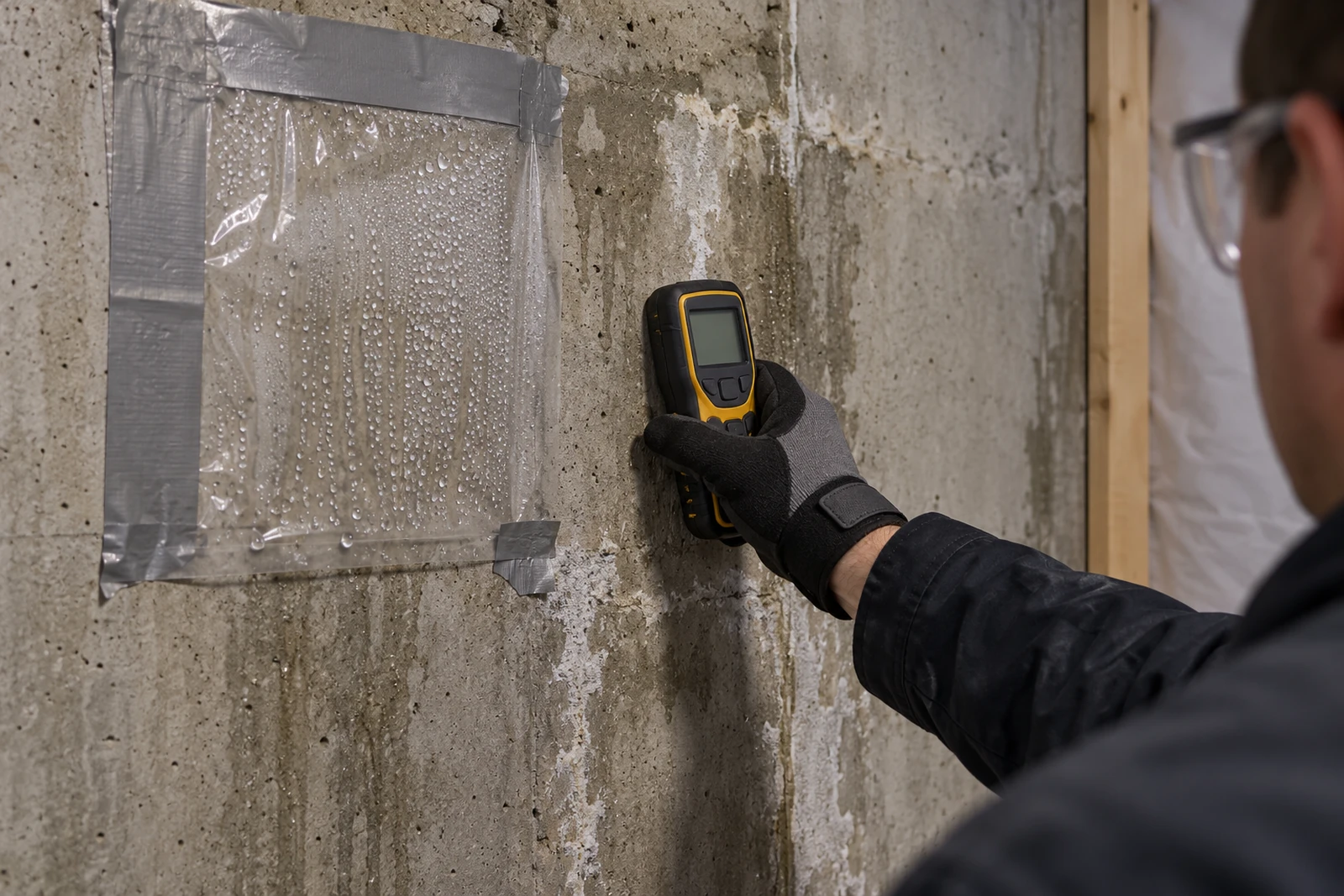
Not every damp wall is a leak
In summer, warm humid air condenses on cool basement concrete. The simple test: tape a square of plastic to the wall for a day or two. Moisture under the plastic points to water coming through the wall; moisture on top points to condensation.
- Humidity readings in the basement
- Moisture meter readings on walls and floor
- Checks for efflorescence and staining patterns
Water in the basement right now?
Safety comes first, then limiting damage.
Stay safe around power
Do not walk through standing water near electrical outlets or appliances. If it is safe, shut off power to the basement; if not, call your utility.
Sewage? Keep clear
Sewer backup water is contaminated. Keep people and pets away and avoid using drains until it stops.
Photograph everything
Take photos and video for your insurer before cleanup, and note when the water appeared.
Call your insurer
Ask what your policy covers for sewer backup and overland water before arranging repairs.
Not sure where the water is coming from?
A water assessment traces it from the roofline to the sewer line before anyone quotes a fix.