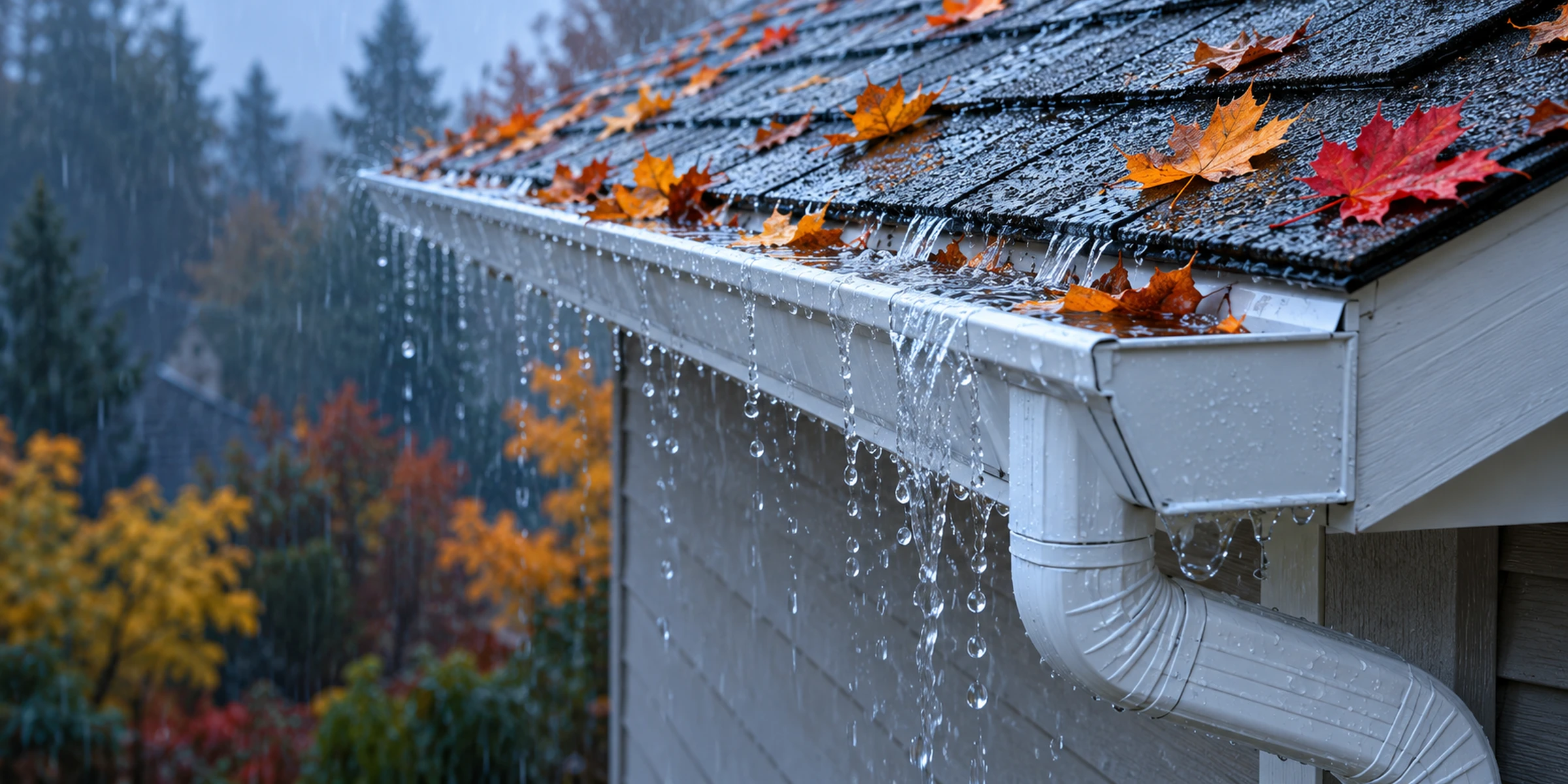
Eavestroughs are your first line of basement defence
Seamless aluminum eavestroughs formed on site, sized to the roof, pitched to the outlets and discharging well away from the foundation.
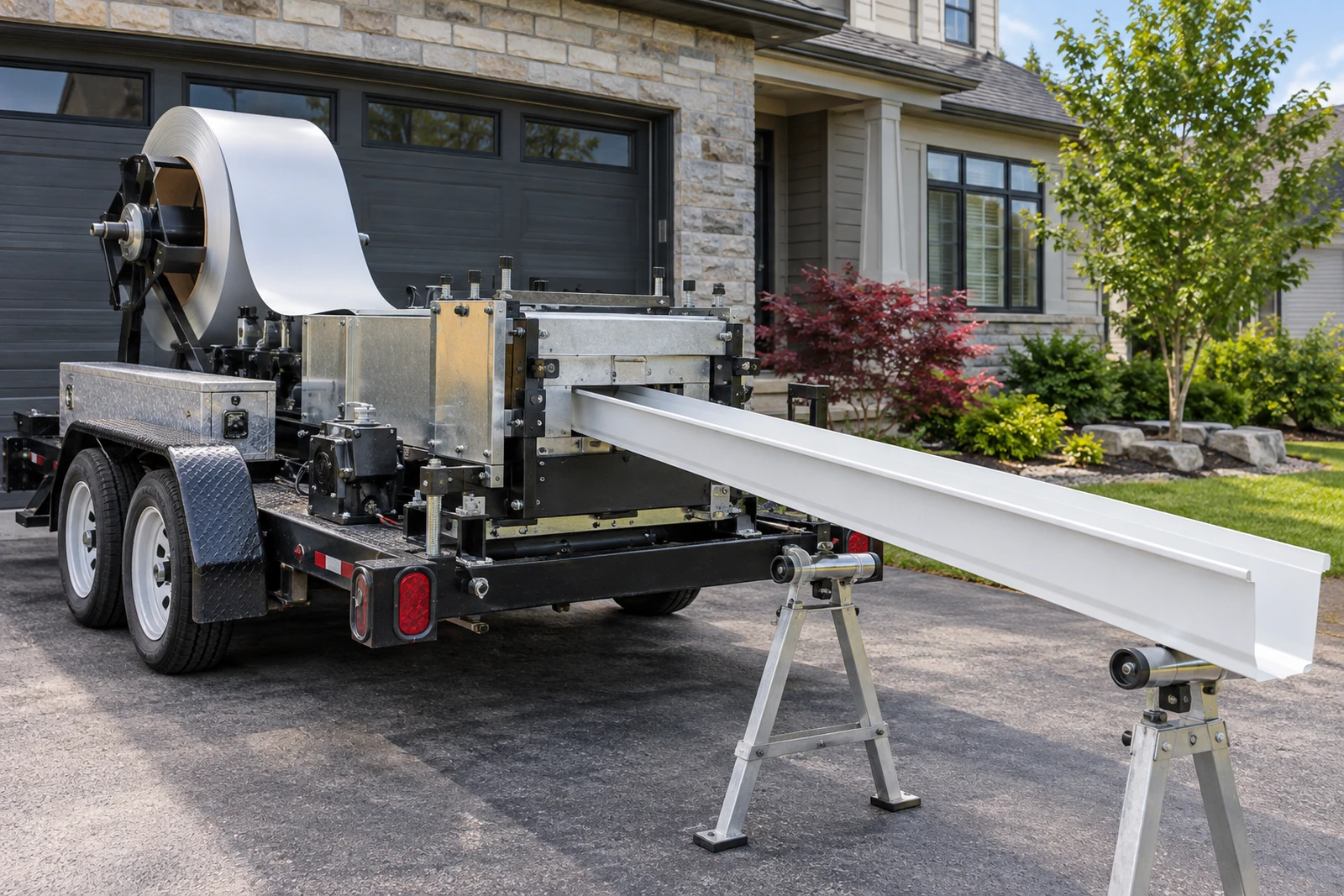
5-inch or 6-inch?
Most homes are well served by 5-inch K-style eavestroughs. Larger roof areas, steep pitches or chronic overflow with clean troughs call for 6-inch with larger downspouts.
- Formed seamless on site
- Hidden hangers instead of spike-and-ferrule
- Heavier-gauge aluminum for exposed runs
- Downspouts spaced to the run length
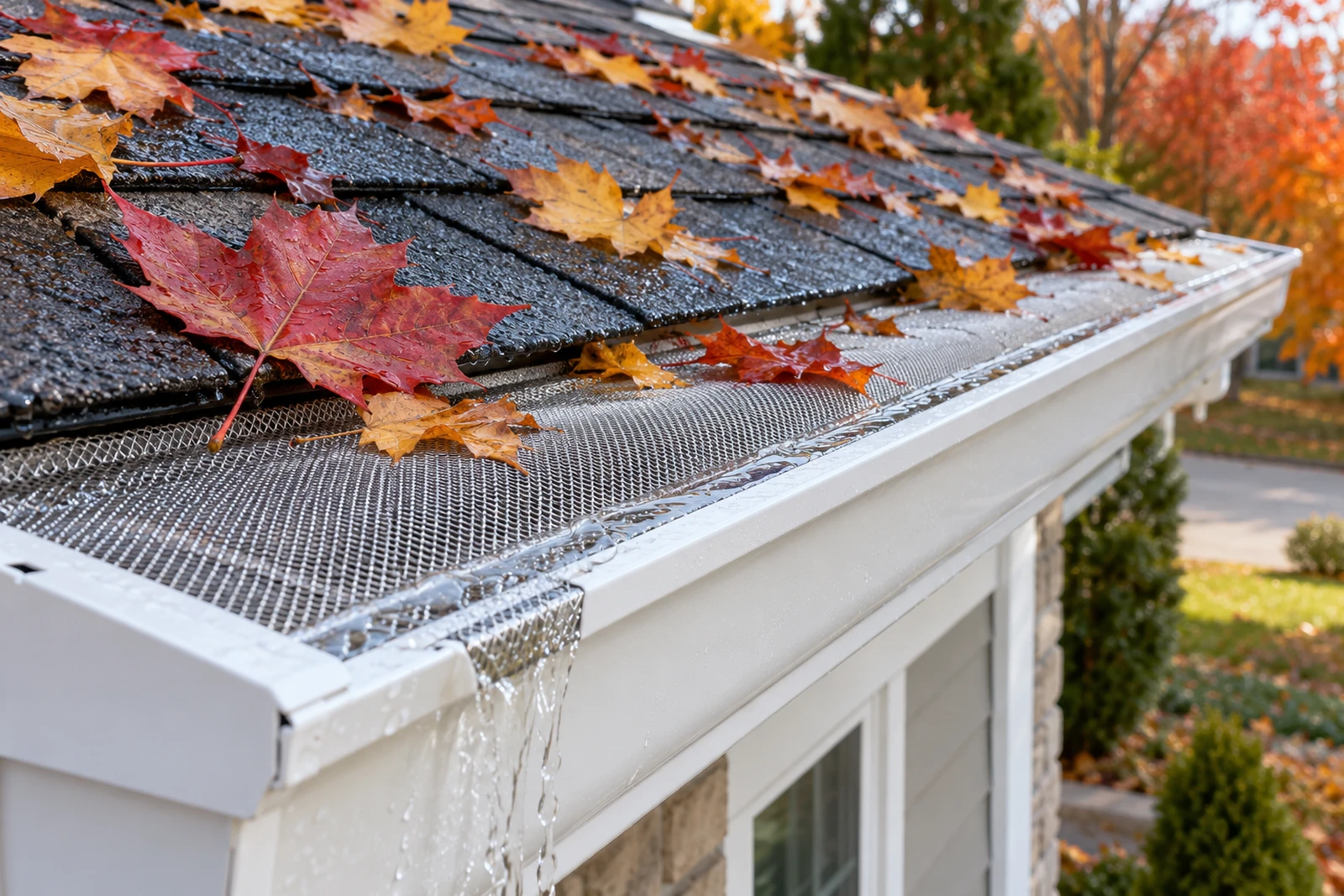
Guards that work in a Canadian winter
Fine micro-mesh guards keep leaves and needles out without leaving a flat surface for water to freeze on. Foam inserts tend to hold water and turn to ice.
- Micro-mesh for mixed leaves and needles
- Fitted to the existing roof edge
- Still needs an occasional rinse
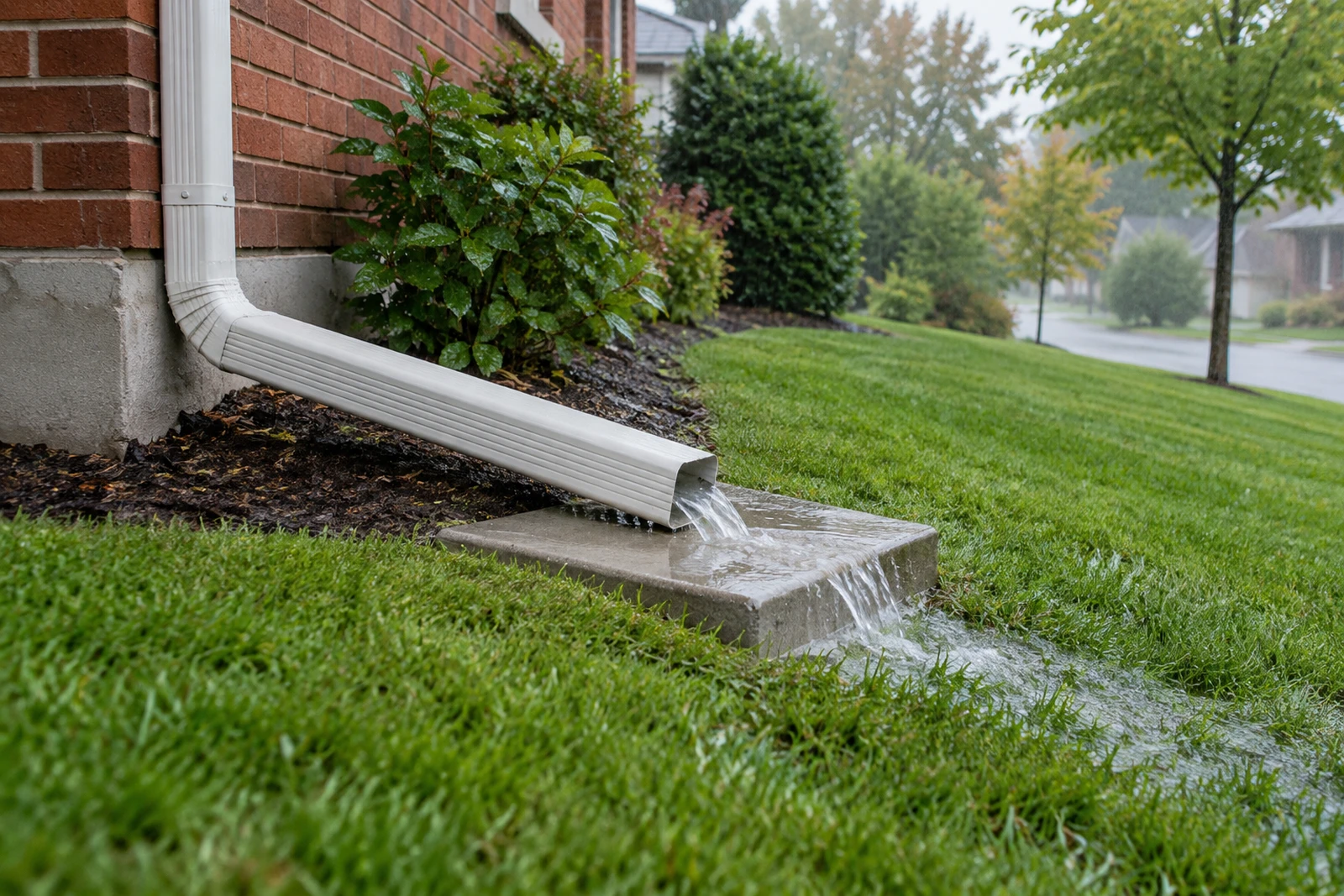
Where the water lands matters most
A downspout that ends beside the wall dumps a whole roof section against the basement. Extend discharge well away from the foundation onto ground that slopes away — and check your city’s rules, as some require downspouts to be disconnected from the sewer.
- Extensions or buried leaders
- Splash pads onto sloped ground
- Disconnection from sewer connections where required
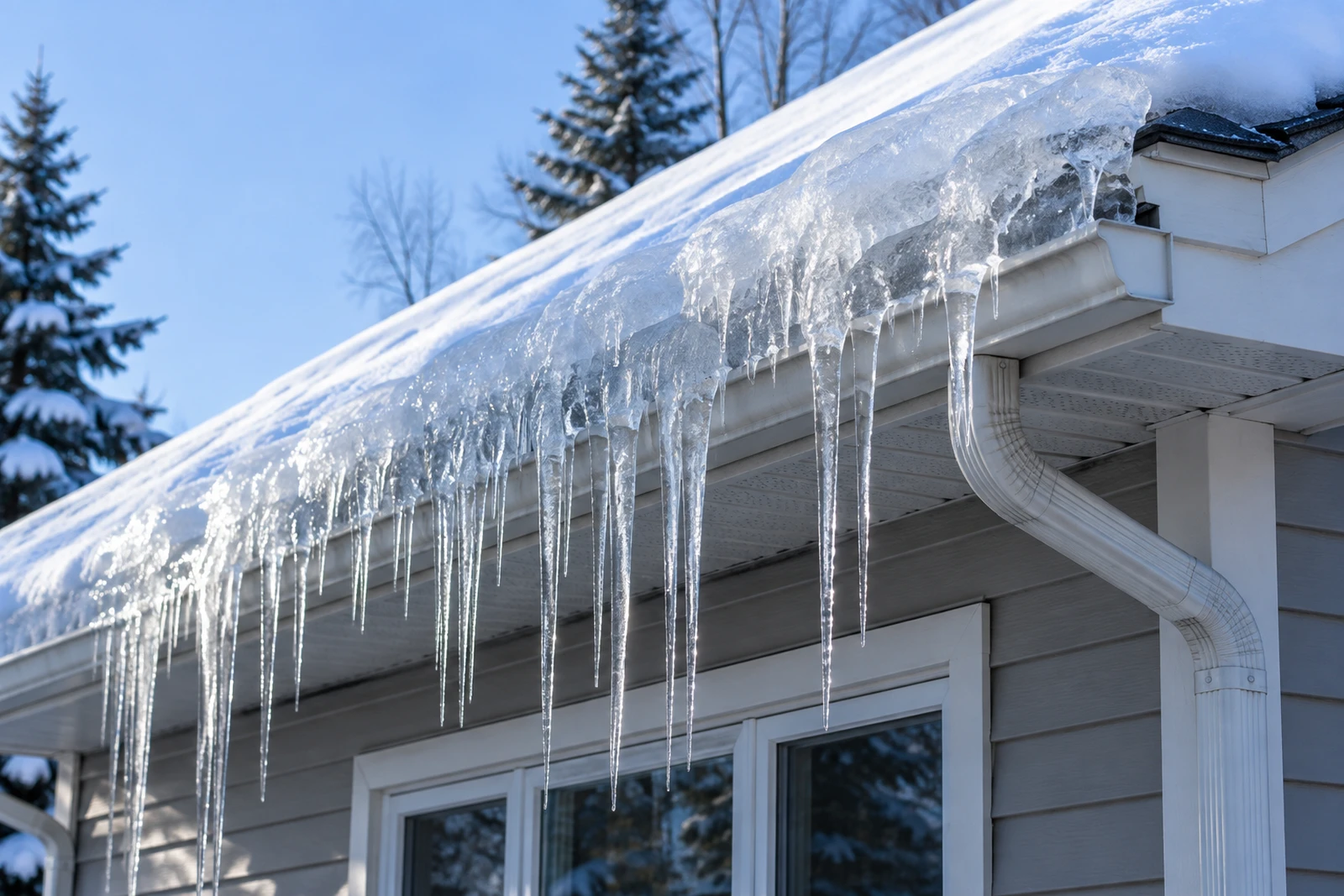
Ice dams start in the attic
Heat leaking from the attic melts snow on the roof; the melt refreezes at the cold eave and backs up under the shingles. Bigger eavestroughs cannot cure that — insulation, air sealing and ventilation can. Heat cable can help on problem sections.
- Attic heat loss is the root cause
- Heat cable on chronic eaves
- Keep downspout exits clear of ice
Cleaning and check-ups
Two visits a year catch most problems: late spring and after the leaves drop.
Clean & flush
Debris removed by hand, then each downspout flushed to confirm it runs clear.
Seal & re-hang
Leaking joints and end caps resealed; sagging sections re-hung to the right pitch.
Photo report
Before-and-after photos of each run, with any repairs noted.
Not sure where the water is coming from?
A water assessment traces it from the roofline to the sewer line before anyone quotes a fix.