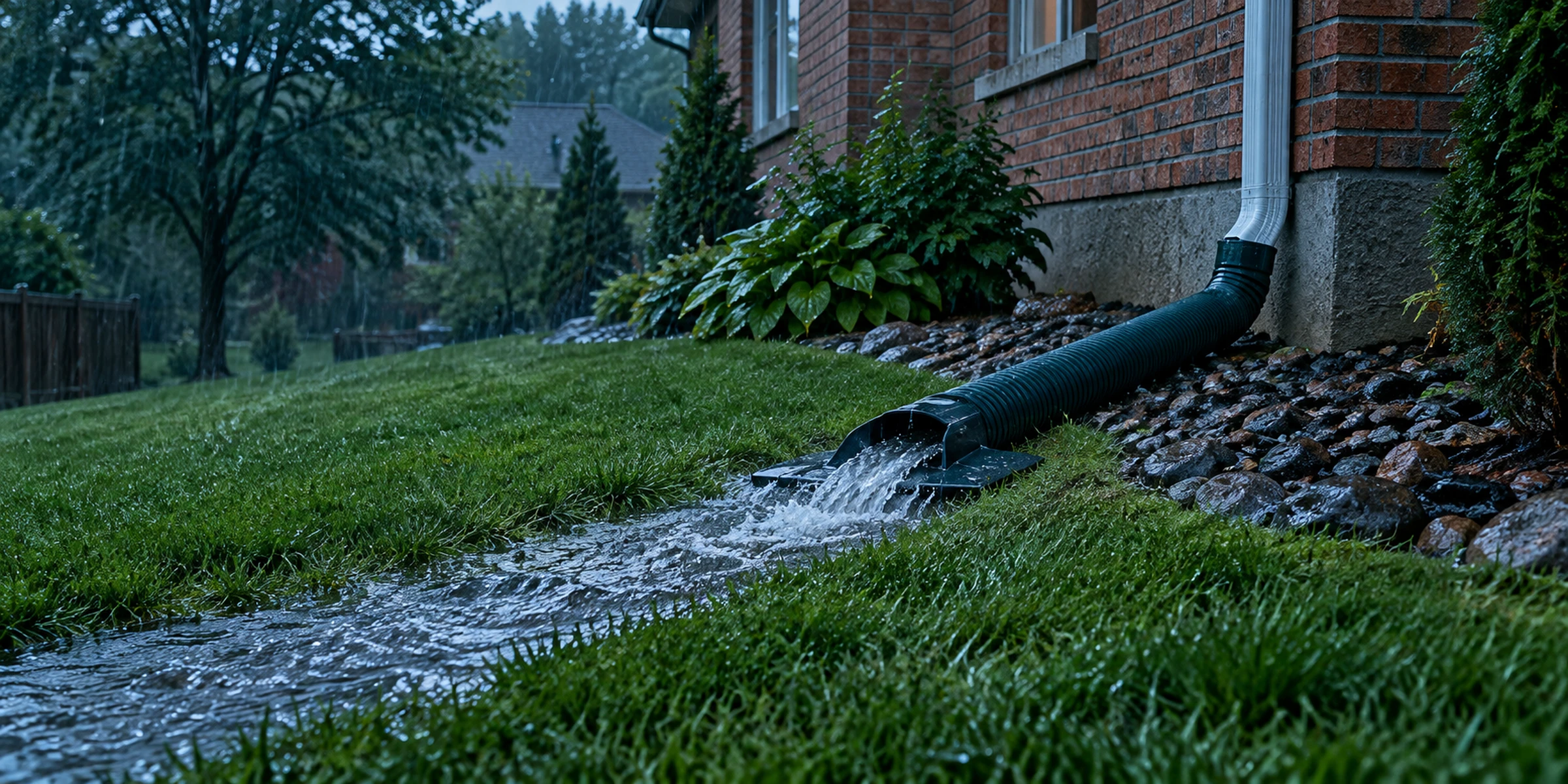
Drainage that moves water away — and keeps sewage out
Weeping tile, sump pumps, backwater valves, window wells and grading: the systems that decide where water goes during a storm.
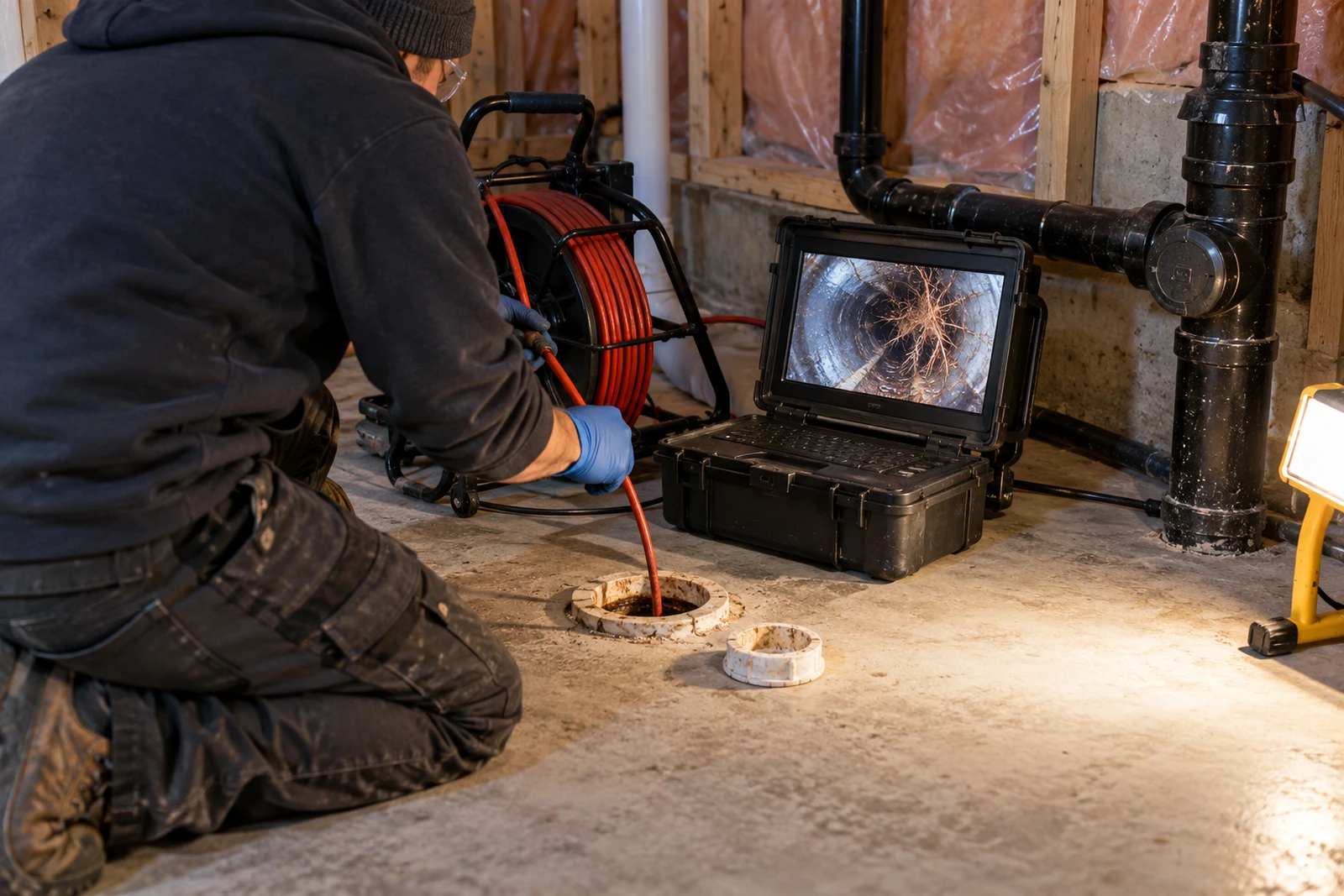
See inside the drain before replacing it
A camera run through the cleanout shows whether the perimeter drain is flowing, silted, crushed or full of roots — and whether it connects to the storm sewer, the sump or both.
- Camera inspection with recorded video
- Flushing where the pipe is sound
- Replacement with exterior or interior drainage
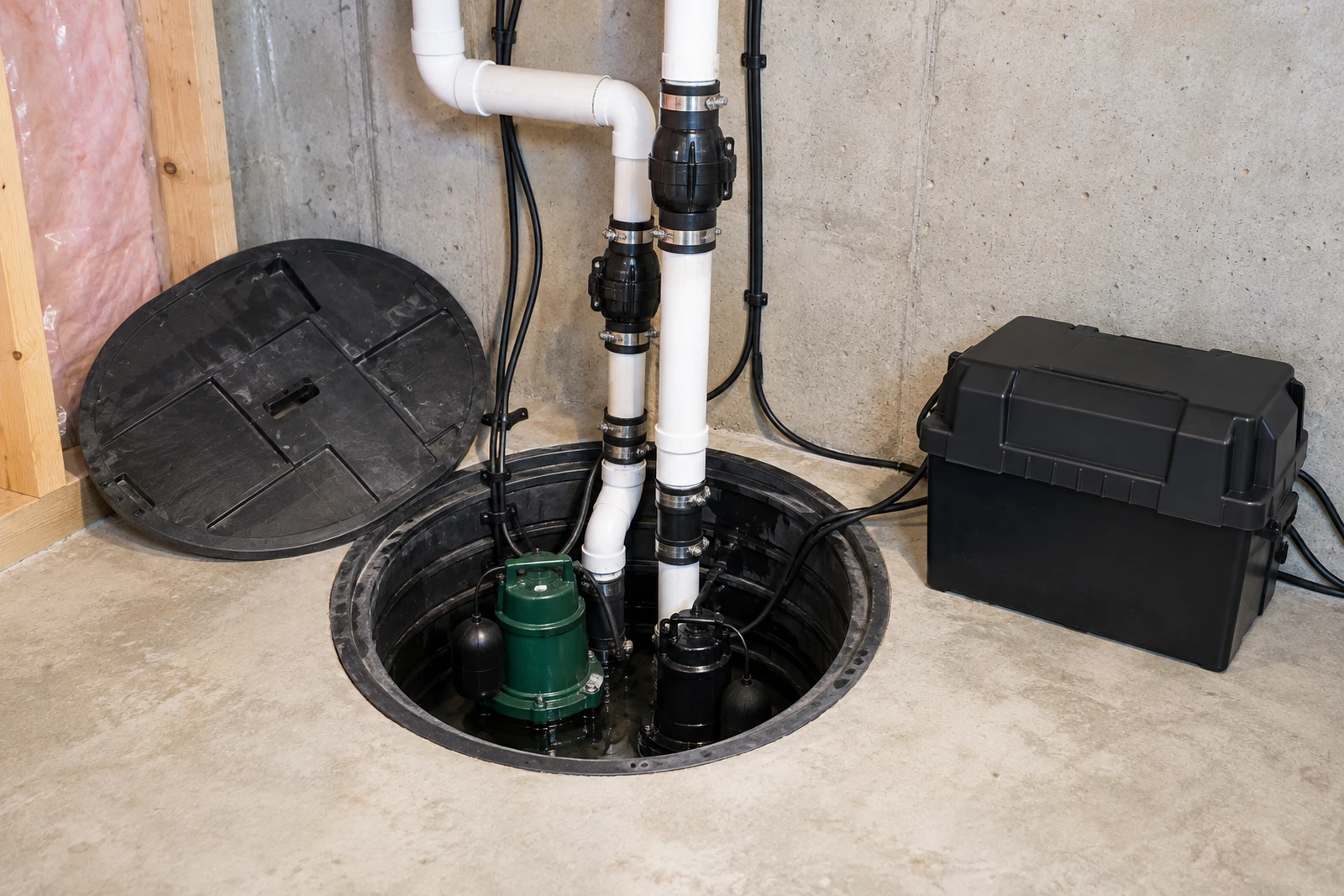
A pump is only as good as its backup
Storms that fill the sump often knock out power at the same time. A correctly sized pump, a check valve, a high-water alarm and a battery backup keep water moving.
- Primary pump sized to the inflow
- Check valve and secure discharge line
- High-water alarm
- Battery backup pump
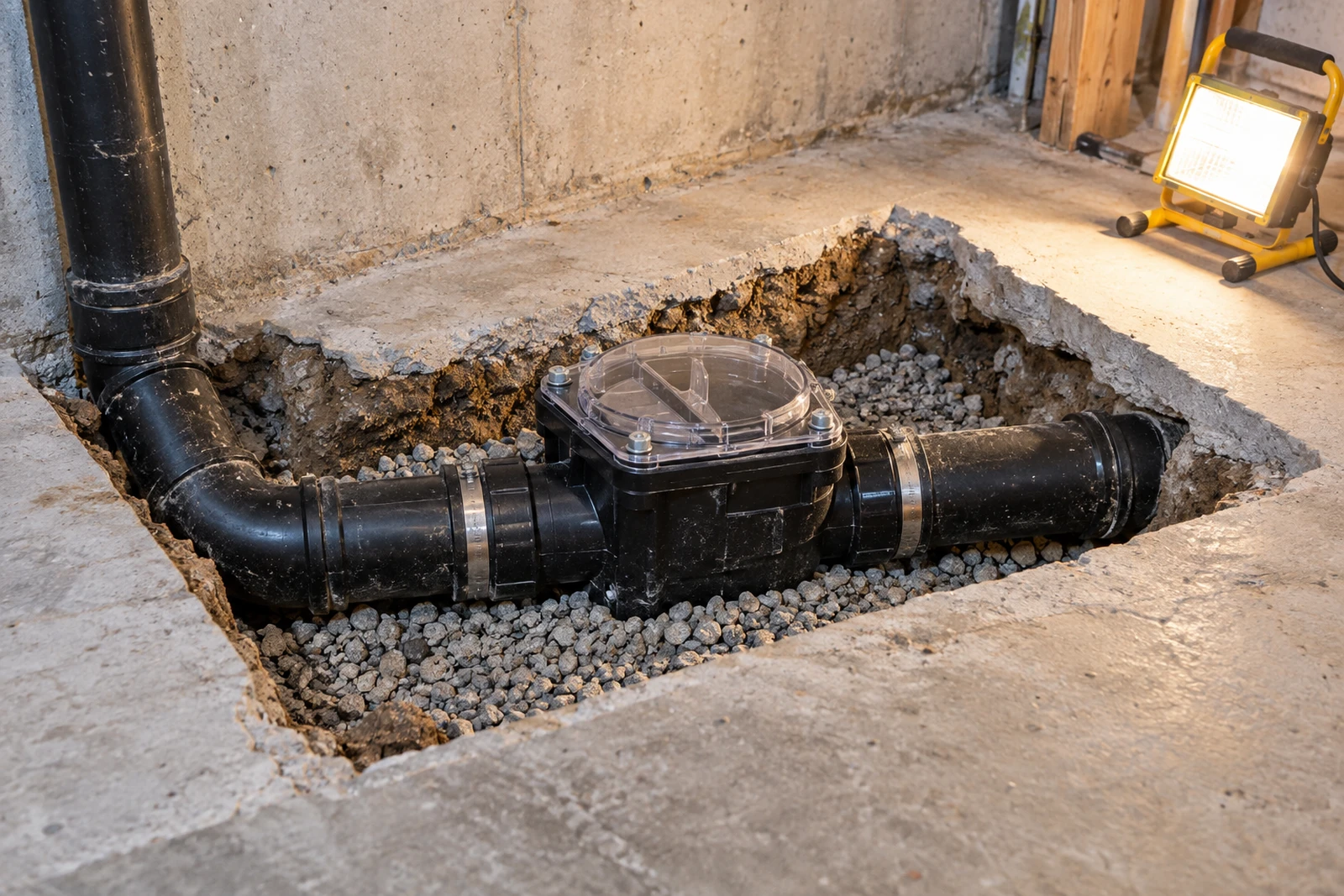
Stopping the sewer from flowing backwards
A backwater valve on the main sewer line lets waste leave the house normally and closes when the municipal sewer surcharges. It needs a permit and an inspection, and an accessible cover for maintenance.
- Location of the sewer lateral confirmed
- Permit and inspection arranged
- Access cover for cleaning
- Homeowner walkthrough of maintenance
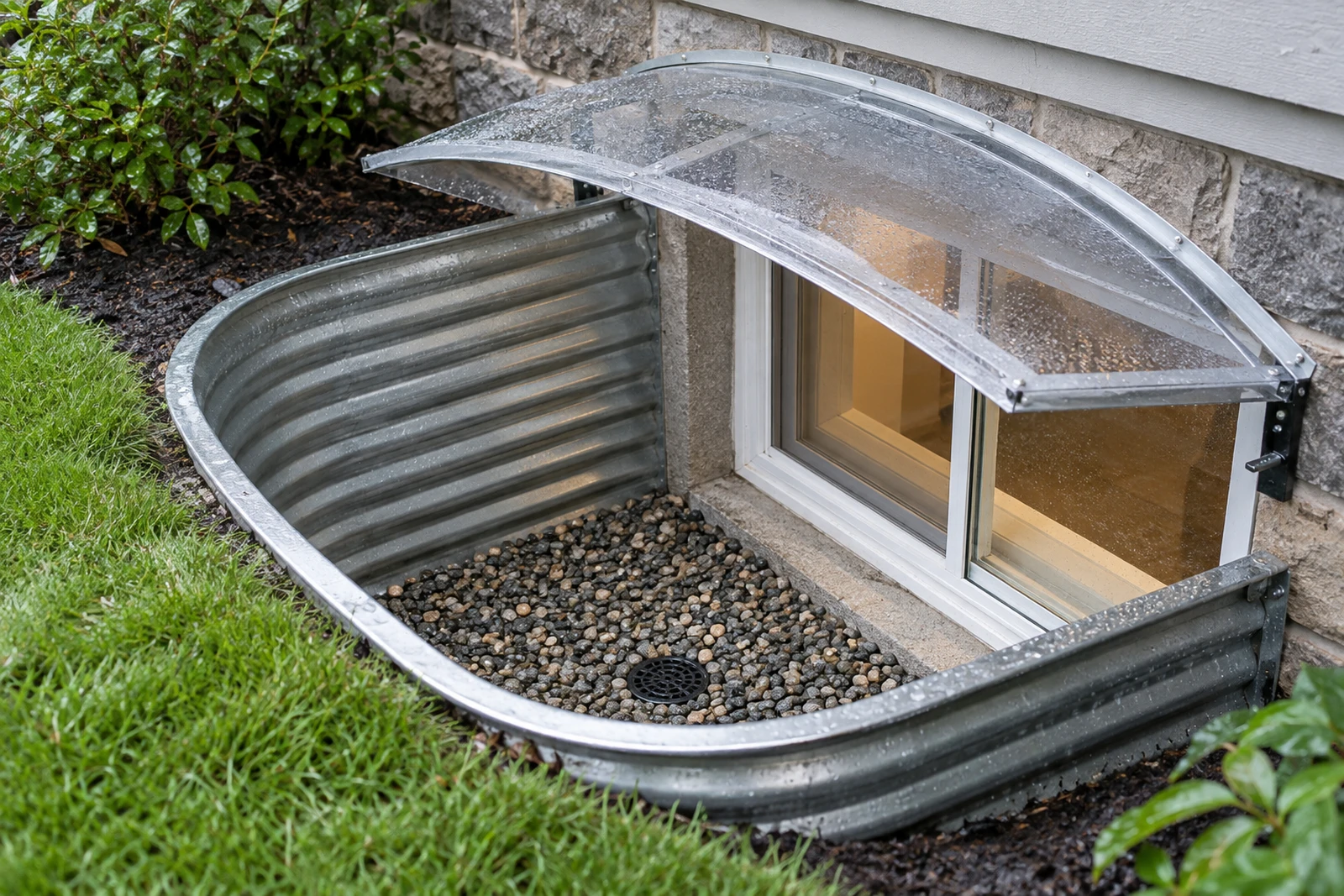
Wells that drain instead of filling up
A well needs a clean gravel base that drains down to the weeping tile, the right height above grade and a cover to keep rain and snow out.
- Drain to the weeping tile
- Well height above finished grade
- Clear or solid covers

Ground that slopes away, not toward
Settled soil beside the foundation sends surface water straight to the wall. Federal guidance suggests the soil at the foundation should sit about 8 cm higher than soil 1.5 m away, with a 2% slope often treated as the minimum.
- Topping up settled soil
- Swales where lots are tight
- Checking decks, steps and walkways
A layered approach to basement flooding
Canada’s CSA Z800 guideline on basement flood protection describes measures in layers — the same way we plan a home.
- Eavestroughs clean and sized right
- Downspouts discharging away
- Grading sloping away
- Window wells draining and covered
- Weeping tile flowing
- Sump pump with backup power
- Backwater valve on the sewer line
- Flood alarm in the basement
Not sure where the water is coming from?
A water assessment traces it from the roofline to the sewer line before anyone quotes a fix.